Le notti di Cabiria (Nights of Cabiria). 1957. Italy. Directed by Federico Fellini. Screenplay by Fellini, Tullio Pinelli, Ennio Flaiano. With Giulietta Masina, François Périer, Amadeo Nazzari, Franca Marzi. Music by Nino Rota. In Italian; English subtitles. 4K DCP restoration by TF1 Studio and Studiocanal, with the support of the CNC. Restored from an interpositive and French and Italian soundtrack negatives. Digital and photochemical restoration work carried out by L’image Retrouvée.. 117 min. The nights of Cabiria, a prostitute in Rome, often end in despair, but there’s always something unbreakable about her. This resilient character, immortalized by Giulietta Masina’s wholehearted performance (which won her the Best Actress award at Cannes), first appeared in a brief cameo in The White Sheik (1952). That appearance made its mark, and when Fellini met a prostitute who recounted her stories while he was making Il Bidone (1955), the idea for this film was born. The heartbreaking tale became the second Fellini film (after La Strada) to win an Academy Award for Best Foreign Language Film. Pier Paolo Pasolini, who was familiar with the language of Rome’s underworld, contributed to the dialogue. Seen for decades only in poor dupe copies, Rialto’s 1998 35mm reissue, created from the best elements of several international archives, featured a fresh new translation and subtitles (by Bruce Goldstein and Giulia D’Agnolo; revised in 2020 by Goldstein and Fiamma Arditi) and the premiere of the seven-minute “Man with the Sack” sequence, cut from earlier release prints against Fellini’s wishes. (MoMA)
Fine fortress from the colonial past of the Americas
————————-
“Québec City may be the bastion of all things French in Canada (even the stop signs read Arrêt, whereas in France they read “Stop”), but the stunning cliff-top fortress of La Citadelle approximately 360 feet (120 m) above the St. Lawrence River atop Cap Diamant is a definite throwback to British Empire rule. The fortress still features guards sporting scarlet tunics and bearskin hats, and it remains the most important fortification built in Canada under British rule. Not surprisingly perhaps, it is referred to locally as the
“Gibraltar of America” and is said to be the largest North American fort still working as a military base.
La Citadelle (the French name is used both in English and French) was designed according to a defense system developed by the French military engineer Saint-Léger-Vauban, who refined these star-shaped fortresses to make them virtually impregnable to the assault weapons of the day. Not much of the original French fortress remains except for the redoubt of 1693 and the powder magazine of 1750 (now a museum). Today the Historic District of Old Québec, including the Citadelle, is a UNESCO World Heritage site representing an eminent example of a fortified colonial town and illustrates a major stage in the populating and growth of the Americas during the modern and contemporary period.
La Citadelle’s layout is in the shape of a four-pointed polygon, with each point forming a bastion.
Most of the twenty-five buildings on the 37-acre
(15-ha) site were erected by the British on the orders of the Duke of Wellington. He anticipated another U.S. attack after the war of 1812. It never happened; in fact there has never been an exchange of fire with an invader and therefore no chance to test the guns protecting the Bastion Prince de Galles, which can fire a shell almost 3 miles (5 km). “JH”#1001HistoricSitesRichardCavendish (#30theamericanscanada)
Victorian farmhouse that provided the inspiration for a literary classic
———————————————-
Situated in Prince Edward Island National Park, Canada, Green Gables House is one of the most visited historic sites in the country and where author Lucy Maud Montgomery (1874-1942) set her best-selling novel Anne of Green Gables and its sequels.
They feature Montgomery’s memorable protagonist, Anne Shirley, an imaginative and outspoken redhead.
Built in the mid-nineteenth century, Green Gables House is a typical mid-Victorian farmhouse, deriving its name from the vibrant, dark green paint of the triangular gables on its roof. Montgomery was brought up mainly by her grandparents on rural Prince Edward Island. Their cousins, the Macneills, lived close by in Green Gables House, and Montgomery spent her isolated childhood playing in her cousins’ garden. In 1904, while leafing through an old notebook, Montgomery came across a story describing an elderly couple’s application for the adoption of an orphan boy,
but by mistake a girl was sent instead, This discovery gave the Canadian writer the idea for her literary heroine and Anne of Green Gables, the first book in her popular series, was published in 1908.
Prince Edward National Park was set up in the 1930s as a place of natural beauty and as a tourist attraction. A golf course designed by the architect Stanley Thompson runs beside Green Gables House.
Lover’s Lane and the Haunted Wood-both places Anne haunts in the novels—can also be visited. LaL (#1001historicsitesrichardcavendish)
Sassestta, the most innovative and influential painter of Sienese quattrocento.
St. Anthony Beaten by Devils / Sassetta Created 1423-26 Medium Oil on panel Dimensions 9½ x 15 ¾ in / 24 x 39 cm Location Italy 🇮🇹, Pinacoteca Nazionale, Siena
Stefano di Giovanni di Consolo (c.1400-50), known as Sassetta, may be the most innovative painter of the Sienese quattrocento. Alongside Florence, Siena was a leading cultural center in Tuscany. Sienese painting was characterized by decorative, mystical works, emphasizing the miraculous and divine. Sassetta emerged within this flourishing tradition, but began to incorporate innovations from the more naturalistic Florentine School. The Altarpiece of the Eucharist is his earliest known work, commissioned in 1423 for the Church of the Carmelite Order. It is a triptych depicting scenes from the lives of St. Anthony and Thomas Aquinas, the central panel of which was lost when the altarpiece was disassembled in 1777. St. Anthony Beaten by Devils is one of the surviving panels. The hermit St. Anthony is being bludgeoned with clubs by three devils intent on breaking his faith. This terrible scene has an emotional resonance typical of later Renaissance works, as the old man lies helpless beside his abandoned walking stick. The muted gray light pervading the sparse, rocky landscape of St. Anthony’s isolation offsets the vivid glow of his halo and the fiery reds punctuating the devils. Sassetta’s fusion of Sienese art with Florentine innovation was instrumental in bringing Sienese painting from the International Gothic into the Renaissance style. Although Siena’s artistic progression would later be tempered by the city’s economic and political decline, Sassetta’s influence was widespread in Siena and beyond. SLF in 1001 Paintings
Top right: Allegorical personifications of Faith, Charity and Hope Left: Peace, Fortitude, Prudence
Middle: Good Government
Right: Magnanimity, Temperance, Justice Siena, Palazzo Pubblico, Sala dei Nove
———————————-
AMBROGIO LORENZETTI
C. 1290 – C. I348 (?)
We tend to see Gothic art as something reserved exclusively for churches, and there can be no doubt that the development of ne artistic techniques and media was primarily fuelled by ecclesiastical commissions. There nevertheless evidence that a large and impor ant body of secular art was also created between the 13th and 15th centuries. Historic sources document commissions for paintings almost none of which have survived into the present.
The Lancia 12HP was the first production car made by the company’s founder, Vincenzo Lancia. In 1908 the car was unveiled at the Turin Motor Show.
Lancia was born in 1881 and began working at his first job as an accountant in a bicycle factory in Turin.
When Fiat bought the bicycle company in 1899, Lancia was named chief inspector. He worked with Fiat for eight years, during which he started test-driving the company’s cars, as well as driving Fiat’s racing models, winning in many events. When, in 1906, he created the Lancia company he was not concerned with comfort or practicality; he was thinking only of racing.
Lancia began with a 12-bhp (9-kW) engine that was available on a straight chassis. A variety of different body styles were dropped on later, including everything from closed landaulets to a sporting two-seater. The Lancia
Corsa was one example of that first car and was raced at Savannah, Georgia, in 1908. These early Lancia preproduction cars were known for being lightweight and were acknowledged as well-engineered vehicles.
Also in 1908, Lancia started work on production of his first automobile. Lancia’s first car, called the Alpha, had a 155-cubic-inch (2,543-cc) four-cylinder engine with a side-valve.
Lancia developed into a company unafraid of engineering innovations. It manufactured the first standard production V6, the first electrical system in a car, and the first five-speed standard transmission.
Perhaps Vincenzo Lancia’s most enduring legacy is found in the world of motorsports. Lancia can claim ten world rally championship titles, a record that exceeds that of any other car manufacturer. BK
REBELLING against foreign domination, King Zedekiah of Judah defied Nebuchadnezzar II, ruler of the newly dominant regional power Babylon. The rebellion ended in even worse disaster for the Jews than their earlier revolt against the Assyrians because they were subjected to an unprecedented mass exile, known as the “Babylonian Captivity.”
#1transcribedtextaftermk #1001andmore
“Jehoiakim, installed on Judah’s throne by Egyptian pharaoh Necho II after the Battle of Megiddo, had tried to stand out against the expansion of Babylonian power.
In 597 BCE, accordingly, Nebuchadnezzar II of Babylon had taken Jerusalem after a short siege, and replaced Jehoiakim with a puppet of his own.
King Zedekiah, too, hankered after the authority of real king, however, and in 587 BCE he tried to break away.
Alone, his people could do nothing, but Zedekiah went behind Babylonian backs to make an alliance with Egypt’s Pharaoh Apries, who agreed to assist the Jews if they rebelled. Apries was as good 😊 as his word: unfortunately, however, the army he sent into Judah was quickly and easily dispatched by Nebuchadnezzar’s forces, who could now concentrate entirely on the errant kingdom of Judah land a desert . . . and reduce your cities to ruins,”lamented the prophet Jeremiah (Jeremiah 4:7).
After about eighteen months, Jerusalem’s defenders were finally starved into submission. Zedekiah’s two sons were captured and executed before his eyes 👀 which were then put out. The king was led off to exile in Babylon, accompanied by up to 10,000 of his nation’s aristocratic, religious, and scholarly 🧐 elite: Nebuchadnezzar was determined to destroy not just the spirit but the very identity of the Jews, as well.” (MK, in 1001 Battles – page 30 – 2450 BCE-999 CE) History of World-Ideas-Important Days and Historic Sites 1001 Before You Die Collection My one regret in life is that I am not someone else
“Raise the signal to go Zion! Flee for safety without delay! For I am bringing disaster from the north, even terrible 😢 destruction.”
Jeremiah 4:6
#1001beforeyoudiecollections
⬇️This cuneiform tablet from Babylon records Nebuchadnezzar II’s capture of Jerusalem and campaign against the king 👑 of Egypt
#1001beforeyoudiecollection
——————————-
Losses: Many thousands dead 💀; 10,000 Jews deported to Babylon (30 | 2450 BCE-999 CE)
THE SECOND MAJOR BATTLE FOUGHT AT MEGIDDO, (1001 Before You Die Collection) in modern-day Israel, occupied when King Josiah of Judah made a bold attempt to rebuilt the kingdom of Israel amid the crumbling ruins of Assyrian power.
However, the Egyptian Pharaoh Necho II defeated and deposed him for his pains, and Egypt became the dominant force in Palestine. (History of World-Ideas-Important Days and Historic Sites)
“AFTER Solomon’s death 💀 in 926 BCE, the kingdom of Israel had broken in two: Judah in the south; Samaria in the north.
The dream of reuniting the realm remained, but — with Assyrian power apparently irresistible — it was one that the Jews realized would have to wait. However, after Nabopolassar’s triumph at Nineveh, Judah’s King Josiah saw his historic opportunity: the Assyrian Empire was progressively imploding. When Pharaoh Necho II marched his army eastward to offer his Assyrian ally assistance, Josiah resolved to prevent their getting through. He planned to intercept the Egyptian army as it crossed a narrow pass near the city of Megiddo: in those rugged uplands, the Jews should have had the advantage of surprise. (#1transcribedtext)
In the event, Josiah’s plan worked to the extent that he was able to get his army into position, but the advancing Egyptian simply swept his force aside. If the biblical account (II Chronicles 35) is to be believed, Josiah was wounded by an archer at Megiddo and was taken to Jerusalem, where he died. Marching on to Mesopotamia, the pharaoh was defeated (😔) by Nabopolassar’s Babylonians at Charchemish — the vacuum Josiah had hopped for was created, but of course he was no longer there to take advantage. His son, Jehoahaz, succeeded him, but was deposed by Necho on his homeward journey in favour of his more tractable brother, Jehoiakim. Egypt was now the real power in Palestine.”(#1transcribedtextafterMK in 1001 BATTLES THAT CHANGED THE COURSE OF HISTORY/ 2450BCE-999CE|29 pg)
Facultative: Losses: Unknown | follow Kadesh 1275 BCE —— Fall of Jerusalem 587 BCE (will be fallow in the next story)
——————-
About image:
Kneeling Statuette of King Necho, ca. 610-595 B.C.E. Bronze, 5 1/2 x 2 1/4 x 2 3/4in. (14 x 5.7 x 7cm). Brooklyn Museum, Charles Edwin Wilbour Fund, 71.11. Creative Commons-BY (Photo: Brooklyn Museum, 71.11_threequarter_PS1.jpg)
Artwork: The Virgin of the Rocks (Mary with Christ, the Infant – St John and an Angel)
Grapes: Chardonnay 50%, P. Noir 40%, P. Meunier 10%
———————-
“Beaumont de Crayères is the sonorous brand name for the respected bijou Champagne cooperative of Mardeuil, near Epernay. The 247 members cultivate 235 acres (95 ha) of fine vineyards, mainly on the sunny slopes of Cumières and Mardeuil: These premieres crus are renowned for bright, fruit-laden Point Noir and refined Point Meunier.
Since 1987, Beaumont’s chef de cave, Jean-Paul Bertus, has created elegant, opulent Champagnes notably the Fleur de Prestige, the least expensive of Beaumont’s vintage range. The Fleur 1996 is the grand apéritif par excellence, combining exhilarating acidity and tender ripeness. The prestance of Chardonnay shows in the bright-green flashes among the deep-gold colors; the bubbles are lacelike, persistent yet gentle; aromas of spring flowers mingle with the hedgerow fragrances of hawthorn and honeysuckle. As the wine warms, the bouquet embraces pear, peach, and fresh hazelnut.
The finish has a splendid mass of lemony freshness.
For regular drinking, Beaumont’s non-vintage Grande Réserve is a fine example of how good Meunier-led Champagne can be.”(ME — 1001 WINES—24/Sparkling wines — 1001 Before You Die Collection)
Dimensions: 130 cm × 162 cm (51 1⁄8 in × 63 3⁄4 in)
Location: National Gallery, London, UK
“I had the misfortune to lose my two wives and six children, if I didn’t get up with my work, what would have been chosen by me so far.”
(The statement belongs to Henri Rousseau in 1907) “The naïve and primitive style of Henri Rousseau’s (1844-1910) work is instantly recognizable, yet in his time and for some years after his death, the artist was repeatedly ridiculed and his work deemed “childish.” He was born in Laval in the Loire Valley and raised within fairly impoverished circumstances. He spent four years in the army before moving to Paris in 1868and working as a clerk in a law office. Rousseau did not turn to art until late in his life:
his first known work, Landscape with a Watermill is dated 1879, and he did
not launch his public artistic career until 1885. Tiger in a Tropical Storm (or Surprised!) is the first of the series of jungle scenes that Rousseau painted, and was exhibited at the Salon des Indépendants in 1891. The artist claimed that he had encountered such exotic jungle scenes while serving as a regimental bandsman in Mexico in 1860, but in fact, he had never left France. It is more likely that his inspiration came from the botanical gardens in Paris including the jardin des Plantes. Rousseau worked from the background to the foreground layering his paint meticulously, and using an enormous range of greens to express the verdant lushness of the jungle. To achieve the slashing rain he devised a method of training thin silver strands of paint diagonally across the canvas, adding to the unusual three-dimensional effect of the work. Though derided by critics of the period, Rousseau’s work was much admired by some of his fellow artists, including Matisse, Picasso, Toulouse-Lautrec, and Robert Delaunay. (TP 1001pbyd)
Cast | William Boyd, James Ellison, Russell Hayden, George Reeves, Rand Brooks, George Hayes, Britt Wood, Andy Clyde, Edgar Buchanan
Original broadcaster | NBC
For fans of . . . | The Lone Ranger (1949)
——————————-
Classic episode
Black Waters | Season 1, episode 21, Hoppy is asked to persuade an Indian chief to give up his land’s oil. Character actor Rick Vallin guests, as he also did on other Westerns such as The Gene Autry Show, Cowboy G-Men, and The Lone Ranger.
—————————
Source 24 Pre-1960s | #1transcribedtext
↕️William Boyd with Topper, after whose death the actor said he would never ride another horse.
For fans of . . . | The Tonight Show (1954), Late Show with David Letterman (1993)
——————————
#transcribedtext
↕️(L-R) Sullivan with The Beatles’ John Lennon, Ringo Starr, and Paul McCartney, during rehearsals for the show. (Source 22-Pre-1960s); #1001beforeyoudiecollections
“In the early 1950s, Frank Sinatra was washed up ——- unable even to land a regular nightclub gig, much less a record contract. His saviour arrived just in time.
Alan Livingston, then VP of A&R at Capitol Records and a confirmed Sinatra fan, signed him to a seven-year deal on March 14, 1953, against the advice of every colleague whose opinion he sought.
Sinatra’s Oscar-winning turn in From Here To Eternity the same year showed Livingston’s prescience. It also signaled the singer’s second chance, which he grabbed with Songs For Young Lovers and Swing Easy. Both are fine sets, but they are most notable because they introduced Sinatra —- initially against his
wishes —- to a young arranger named Nelson Riddle. 1001 Before You Die Collection
#sourceourbookscollection
In The Wee Small Hours arrived not long after Sinatra’s relationship with Ava Gardner collapsed, and it is this split that defines perhaps the all-time greatest brake-up album. The wisecracking, finger-snapping Sinatra of popular legend is absent; this is a man alone. Record store clerks who filed Sinatra under easy listening had surely never heard the barfly confessional of “Can’t We By Friends?” much less the pleading take on Cole Porter’s “What Is This Thing Called Love.” Duke Ellington’s “Mood Indigo,” meanwhile, never sounded bluer.
#1transcribedtext, #a1culturel
Riddle frames this melancholy 😔 in wondrously delicate arrangements on what, in hindsight, is the first record where the pair really clicked. Others would fallow, though in a new and —-then-exotic format. Initially issued as two 10-inch discs, In The Wee Small Hours was soon 🔜 reissued in 12-inch format, inadvertently ushering in the album era.”(1001albumsyoumusthear/22|23 – The Fifties – updated edition – 2016)
“With consistency a great soul has simply nothing to do.”
———————
Ralph Waldo Emerson
Essays
1841
———————-
“The above quotation is taken from the essay titled ‘Self-Reliance’, in which Emerson contends that any attempt to reduce existence or experience to a system inhibits thought and creativity (‘soul’) – that there is no point in trying to develop an all-embracing theory of anything, because in reality, one size never fits all.
The idea is similar to that later expressed in Walt Whitman’s ‘Song of Myself (1855):
‘Do I contradict myself?
Very well then I contradict myself,
(I am large, I contain multitudes.)’
Here again, the suggestion is that a fulfilled life of the mind is one in which every thought may be subjected to renewed scrutiny at any time.
In a perfect world, there are no prejudices, no predispositions, no idées fixes, no received wisdom. As Emerson also writes: ‘A foolish consistency is the hobgoblin of little minds, adored by little statesmen and philosophers and divines.’ These sideswipes at groups to whom Emerson felt antipathy are gratuitous, but the basic point remains unweakened – that consistency may render the soul redundant.” (JP 1001quotations/36Life and Death ☠️) https://www.facebook.com/100063539860715/posts/pfbid0QU62KWZ7xZwNiV2Q14aiVimaviUPEiF63oh2ykRSHvZjxMk7gvxaCnWfYe6zyUhpl/?d=n #1001beforeyoudiecollection 1001 Quotations to Inspire your Life
#a1culturel #1culturel #culturel
ℹ️About image: A drawing ✍️ of Emerson delivering a lecture on philosophy to a gathering in Concord, Massachusetts.
Source text and photography #sourceourcollectionofbooks #sourceourbookscollection
1279 B.C.E.
——————-
Ramses II Crowded in Egypt
——————-
One of the longest and most significant reigns in world history begins.
“Ramses II began his long reign in 1279 B.C.E. upon the death of the founder of the Nineteenth Dynasty, Seti I, who had restored Egypt’s trading influence and power across the Levant, created the most extensive empire of ancient Egypt. Ramses continued his work, fighting renowned, through indecisive, battle of the borders of the empire with the Hittites at Kadesh in Syria in 1275 B.C.E., which defined the limits of power for both states, and which was described in detail on the walls of the pharaoh’s funerary temple in Thebes known as the Ramesseum.
#a1historyofart #a1culturel
————————————
“I changed all countries while I was alone . . . my chariotry having forsaken me.”
Annals of Ramses II
————————————
#1001beforeyoudiecollection
Later in his reign Ramses faced the growing power of the Assyrians. He also embarked on a series of vast and architecturally interesting building projects at Luxor, Karnak, Abydos, and Abu Simbel.
At the latter, he constructed a rock-cut temple that was supposedly dedicated to the god Amun-Re, but which was fronted by four 65-foot-high (20 m) seated statues of himself. When the Aswan Dam was built across the Nile in 1959, the rising Lake Nasser engulfed the site, and the whole Abu Simbel complex, with its statues, was moved to higher ground.
Through little is directly known of the pharaoh’s personal life, one of his wives. — and purportedly his favourite — was Nefertari, for whom he built a fine tomb in the Valley of the Queens. It is also claimed that he fathered some one hundred children. His his reputation has certainly endured as one of the great pharaohs, and following his reign Egyptian power was never again so widespread.
Ramses’s mummified body was discovered at Deir el-Bayhri in the 1880s, and in the 1970s it was finally unwrapped to carry out necessary preservation work, giving modern civilizations a remarkable glimpse of the physical features of the redheaded, physically powerful, hook-nosed king.”(PF 1001beforeyoudieDays)
🔽ℹ️
About Photography: The remains of three colossal statues of Ramses II from the temple built by — and dedicated to — him at Abu Simbel
“Wordsworth wrote ‘My Heart ❤️ Leaps Up’ in 1802; it was first published five years later in Poems, in Two Volumes. The poem is also known by the alternative title of ‘The Rainbow’.
The basic idea is the simple, nine-lines lyric is that the poet liked rainbows 🌈 when he was young, that he still likes them in adulthood and he hopes to go on enjoying them for as long as he lives. The suggestion is that the preference of youth – in this case, for the wanders of nature – determine the tastes of maturity.
Nothing original here, perhaps, but the above line is the most widely used exemplar of the paradox – for a moment, the reader may think, ‘that’s absurd: it’s the wrong way round; obviously the man is father of the child’; but then, a moment later, the real meaning dawns.
Another English poet, Gerard Manley Hopkins, later wrote an eight-line verse in which he responded to the Wordsworth original as fallows:
“The child is father to the man.”
How can he be? The words are wild’.
But is clear that Hopkins was joking; he knew perfectly well what ‘My Heart Leaps Up’ really meant.”(LW in 1001 Questions | 34 | 1001 Quotations to Inspire your Life Life and Death ☠️ #1transcribedtext #1001beforeyoudiecollection
⬇️Wordsworth’s handwritten letter of sympathy to the nephew of his old friend Samuel Taylor Coleridge on the latter’s death.
“Whenever you do a thing, act as if all the world were watching.”
——————————-
Thomas Jefferson
Letter to Peter Carr
1785
—————————-
“ ‘Whenever you are to do a thing, though it can never be known but to yourself, ask yourself how you would act were all the world looking at you, and act accordingly’.
These are the words of advice that Thomas Jefferson wrote from Paris to his nephew Peter Carr.
While in France, Jefferson learned of the death of his youngest daughter, Lucy, from hooping cough. He insisted that the best way to protect her older sister, Mary, was to have her join him in France and asked that someone responsible should accompany the child.
The person chosen was fourteen-year-old Sally Hemings, a slave. Jefferson was then forty-four years old. He began a relationship with Sally soon after the arrived, and by the time she was sixteen, she was pregnant. It is likely that Jefferson fathered all six of Sally’s children. At first sight, the above quotation may seem like advice along the same lines as Jesus Christ’s ‘Do as you would be done by’. But in the light of Jefferson’s personal conduct it could be advice to take steps to avoid violating the so-called ‘Eleventh Commandment’: ‘Thou shalt not get caught’.”(LW in 1001 Questions – Life and Death | 33)
⬇️Thomas Jefferson was the third president of the United States.
His words here could be taken more than one way.
“The months and days are the travellers of eternity. The years that come and go are also voyagers.”
————————-
Matsuo Bashô
Oku no Hosomichi
1689
—————————
“Matsuo Bashô Oku no Hosomichi – sometimes rendered in English as ‘The Narrow Road to the Deep North’ – is a work in prose and verse that tells the story of a poet’s journey to a cold, inhospitable and even dangerous region of early Edo period Japan. Bashô takes on the role of wandering traveller and priest, exploring both the land and its spiritual history. His book expresses a personal freedom that was almost unknown in the strictly regimented society of its time.
Oku no Hosomichi is one of the most popular works of classical Japanese literature. It is a beloved that when the book’s three-hundredth anniversary was celebrated in 1989, millions of fans re-created Bashô’s journey.
Much of the appeal of the work lies in its synthesis of travelogue and spiritual quest, and its metaphorical reflections on life (1001 Quotations to Inspire your Life). Bashô says that we move through the days and months of our lives in the same #way as travellers move through the lands they visit; stopping only briefly, meeting people, making friendships that cannot last forever, and leaving a fleeting remnant of our existence.
Our lives are but a transitory exploration of a small corner of Earth.”(MT in 1001 quotations; Life and Death, 30 📄)
“It is always darkest just before the Day dawneth.”
—————-
Thomas Fuller
A Pisgah-Sight of Palestine and the Confines Thereof, 1650
——————
#1001beforeyoudiecollection
“Thomas Fuller was an English churchman and historian, and a prolific writer. The Pisgah in the title of this work was the name of high hill with a commanding view over the Holly Land.
This idea expressed here has become something of a proverbial commonplace, but there is no earlier recorded expression of it. It is unknown whether Fuller coined the phrase or was merely following previously established usage. (In the 1850s, Irish songwriter Samuel Lover claimed, without any supporting evidence, that the expression had been used in Ireland for hundreds of years.)
Among the best-known subsequent versions of the phrase was in ‘Dedicated to the one I Love’, a pop song by Lowman Pauling and Ralph Bass, which was a hit for The Shirelles in 1959 and the Mamas and the Papas in 1967 – ‘The darkest hour is just before dawn’.
#1transcribedtext #1001beforeyoudiecollections
It is worth noting that there is no scientific evidence to support this assertion. It is not necessary any darker at this time of the night any other. However, that does not weaken the point, which is metaphorical: it is often just when we think that everything is hopeless that matters begin to improve.”(JP in 1001 Questions at pages 28 – about Death and Life)
“I retain’d nothing of France, but the language: My Father and Mother being people of better Fashion, than ordinarily the people call’d Refugees.”
Roxana
————-
Daniel Defoe
———————
Lifespan: b. 1660 (England), d. 1731
First Published: 1724
First Published by: T. Warner (London)
Original Title: The Fortunate Mistress
———————————————————-
“While Roxana, Defoe’s last and most complex novel, in less familiar among general readers than Robinson Crusoe, it has been well known to those interested in the development of the novel, because of its frank portrayal of its heroine’s fate – early destitution and the exchanging of her body for food and shelter, her many children and their abandonment, her lovers her failed reformations, and her enormous wealth.
Perhaps more important, however, than this list of sexual, social, and financial adventures is the voice that Defoe lends Roxana. In a notorious scene, Roxana puts her maidservant Amy into bed with her landlord-lover, saying to herself, and to us in effect, “I’m not a wife, but a whore, and I want my maid to be a whore to, and yet I am a wife and Amy is not a whore but a victim, and yet we’ll do it all again”.
Such a voice, both self-estranging and self-engaging, becomes the string on which the events of the novel are strung, including relations with a French Prince, with the King of England, with a leading financial adviser, with an honest Dutch merchant. Scandalously, Roxana gets her children out of the way almost as soon as she has them, but towards the end, her daughter Susan, who has found employment as a servant girl in Roxana’s own house, comes back to haunt her mother with a child’s cry for recognition. Significantly Roxana’s name is also Susan, and in this climax of self-confrontation the novel descents inconclusively towards a final abandonment.”
Cast: A.C. Abadie, Gilbert M. “Bronco Billy” Anderson, George Barnes, Walter Cameron, Frank Hanaway, Morgan Jones, Tom London, Marie Murray, Mary Snow
———————————
“In every respect we consider is absolutely the superior of any moving picture ever made.”
Edison Company Catalog, 1904
———————-
“Most historians regard The Great Train Robbery as the first Western, initiating a genre that, in few short years, became the most popular in American cinema. Made by the Edison Company in November 1903, The Great Train Robbery was the most commercially successful film of the pre-Griffith period of American cinema and spawned a host of imitations.
What is exceptional about Edwin S. Porter’s film is the degree of narrative sophistication, given the early date. There are over a dozen separate scenes, each further developing the story. In the opening scene, two masked robbers force a telegraph operator to send a false message so that train will make an unscheduled stop. In the next scene, bandits board the train. The robbers enter the mail car, and after a fight, open the safe. In the following scene, two robbers overpower the driver and fireman of the train and throw one of them off. Next, the robbers stop the train and hold up the passengers. One runs away and is shut. The robbers then escape aboard the engine, and in the subsequent scene we see them mount horses and ride off.
Meanwhile, the telegraph operator on the train sends a message calling for assistance. In a saloon, a newcomer is being forced to dance at gunpoint, but when the message arrives everyone grabs their rifles and exits. Cut to the robbers pursued by a posse. There is a shoot-out, and the robbers are killed.
There’s one extra shot, the best known in the film, showing one of the robbers firing point blank out of the screen. This was it seems, sometime shown at the start of the film, sometimes at the end. Either way, it gave the spectator a sense of being directly in the line of fire. #1001andmore #a1historyoffilm
One actor in The Great Train Robbery was G.M. Anderson (real name Max Aronson). Among other parts, he played the passenger who is shot. Anderson was shortly to become the first star of Westerns, appearing as Bronco Billy in over hundred films, beginning in 1907.
In later years some have challenged the claim of The Great Train Robbery to be regarded as the first Western on the grounds that it is not the first or not a Western. It is certainly true that there are earlier films with a Western theme, such as Thomas Edison’s Cripple Creek Bar-Room Scene (1899), but they do not have the fully developed narrative of Porter’s film. It’s also true that it has its roots both in stage plays incorporating spectacular railroad scenes, and in orders films of daring robberies that weren’t Westerns. Nor can its claim to being a true Western be based on authentic locations, because The Great Train Robbery was shot on the Delaware and Lackawanna Railroad in New Jersey. But train robberies, sine the days of Jesse James, had been part of Western lore, and other iconic elements such as six-shooters, cowboy hats, and horses all serve to give the film a genuine Western feel.(EBfilms/23)
“Jacobus and Hendrik-Jan Spijker were coach builders in Hilversum, northern Holland, and in 1880 they founded the Spijker company, in a plan to move into the car-making business. In 1898 they relocated to Amsterdam, where they had been commissioned to build a golden carriage for the coronation of Queen Wilhelmina on September 6. Because the queen had decided that she would not receive any gift on the day of her crowning, and the carriage was going to be a gift from citizens of Amsterdam, she received in the following day. The carriage was not used officially until her marriage in 1901, and it remains in use today.
The coach commission was a pivotal point in the Dutch brothers’ lives, and in 1899, after a great deal of positive publicity, they decided to devote themselves to the manufacture of cars. After producing a few early and conventional models, in 1903 two major things happened. The brothers changed their name and the name of their company from Spijker to the more internationally friendly Spyker, and they built one of the first cars to bear that name, the Spike 60HP. It was a remarkable car in many ways, not least in that it was the first in the world to have four-wheel drive, and the first in the world to have a six-cylinder engine. Having brakes on all four wheels was also a first.
The brothers were noted as innovative designers, and in 1903 they also patented their idea for a “dust-shield chassis.” This was a device that fit under cars and prevented them from creating dust on unpaved roads.
Spiker cars also had distinctive circular radiators, and the brothers later became known in Britain as the Rolls and Royce of Continental Europe. https://www.facebook.com/1001cars/ . MG
The first wars known to history took place about 4,500 years ago in Sumer, southern Mesopotamia — part of modern-day Irak. Described in fragmentary detail on a monument — the Stele of the Vultures — the clash between the Sumerian city-states of Lagash and Umma is the earliest recorded battle.
————————————
1001 Before You Die Collection
“Lagash was ruled by Eannatum, an aggressive king with imperial ambitions. Eannatum entered into dispute with neighbouring Umma over ownership of irrigated land that lay between the two cities.
“Henry Peach Robinson (1830-1901) specialized in combination printing, a technique he learned from Oscar Rejlander. Robinson used this process of combining separate negatives in a single print for much of his career as regarded the technique as an indispensable tool for proving that photography could archive the status of art.
Robinson created many elaborate tableaux from multiple negatives. The above image was his first and best-known combination print – a narrative tableau comprising five separate negatives. It depicts the final moments of a young woman dying from tuberculosis. Her sister stands behind her; her mother sits at her feet, the book in her hand is closed – the story has come to an end. In the background, a male figure – perhaps her father or her fiancé – gazes out of the window at the setting sun, the dying light a metaphor for the young woman as she too fades away.
When this image was first exhibited, some critics appeared, but other considered the subject matter morbid and intrusive. Robinson’s skilful blend of theatricality, sentimentality and artifice did, however, appeal to Prince Albert, who purchased a copy for the British Royal Collection.”(CH)
“This poignant image of an aged soldier is part of collection of fifteen portraits of the last survivors of the French Grande Armée from the Napoleonic Wars of 1803-15. The veterans had gathered in Paris fir the annual reunion on 5 May, 1858, to celebrate the anniversary of the death of the Emperor Napoléon Bonaparte, and must have all been in their sixties and seventies at the time. The Times of London described the atmosphere of the parade thus: ‘The base and railings of the column of the Palace Vendôme appears this day decked out with the annual offerings to the memory of the man whose statue adorns the summit. The display of garlands of immortelles, and the tribute of the kind, is grater than usual . . . the old soldiers of the Empire performed their usual homage yesterday at the same place.’
The soldier pictured here is Grenadier Burg, resplendent in his full dress uniform and bearskin hat, probably wearing the Saint Helena medal that was awarded in 1857 to all veterans of the wars of the French Revolution and the Napoleonic Empire.
Grenadines were the elite infantry of the French Army, selected for being the tallest and most physically powerful soldiers.”(PL)
ISAMBARD KINGDOM BRUNEL AND THE LAUNCHING CHAINS OF THE GREAT EASTERN
—————————
ROBERT HOWLETT
Genre Portrait, industrial, documentary
Date 1857
Location London, UK
Format Glass plate
“Robert Howlett (1831-58) was a pioneer of early photography He rose to prominence while working for the Photographic Institute on New Bond Street, London, working on commission on portraits and other assignments. Among his published works is On the Various Methods of Printing Photographic Pictures Upon Paper: With Suggestions for their Preservation (1856), and he was commissioned by Queen Victoria to photograph Buckingham Palace.
Today, his work is displayed by galleries including the National Portrait Gallery, London, and the San Francisco Museum of Modern Art.
Howlett was commissioned by The Illustrated Times to cover the construction of the world’s hitherto largest steamship, the SS Great Eastern.
The photographs were later transferred into engravings for the magazine. In this, one of his best-known images, he shot a portrait of the ship’s creator and engineer, Isambard Kingdom Brunel, in front of launching chain near the construction in Millwall shipyard. The unusual backdrop, so different from the usual indoor studio sittings of the time, is through to be one of the first examples of environmental portraiture. The picture is beautifully composed, with Brunel standing in a casual manner, his hands jammed into his pockets and a cigar dangling from his mouth, his gaze away from the camera. Our interest in the image today is partly anthropological, as a relic of past costumes and customs, but Howlett also gives the viewer a keen sense of Brunel’s character. He stands unbothered by the smudges of paint on his clothes or the creases of his suit, and his pose is natural and unaffected before the camera.”(AZ)
‘[Howlett] died less than a year after this picture was taken, poisoned, it was suggested, by his own photographic chemicals.’
“Oscar Gustave Rejlander 1813-75) studied painting in Rome, where he made a living making copies of Renaissance masterpieces. In the 1840s, he moved to Britain and took up photography in 1853.
His choice of subject matter was influenced by the works of art he had studied as a young man.
He favoured sentimental genre studies, narrative tableaux and portraits with a strong technical or emotional element. He was convinced that photography could be an art form in its own right.
Rejlander was a pioneer of the painstaking technique of combination printing – joining several different negatives to create a single final image. He used this technique to produce his best-known photograph. Created using more than thirty separate negatives, this scene depicts a complex moral allegory. At the centre a wise old man guides two young men who face a choice between ‘the two ways of life’ – sin or virtue.
The work was controversial for its inclusion of naked figures. Photography, many felt at the time, was too realistic a medium to show nudity. Queen Victoria, however, was not shocked: she bought a copy for her husband, Albert, after seeing it at the 1857 Manchester Art Treasures Exhibition.”(CH)
“The English artist John Constable wrote that skies were ‘the chief organ of sentient’ in landscape painting. This through was shared by early photographs, but landscapes were were at first beyond their technical capabilities. Early photographic emulsions were not equally sensitive to all parts of the spectrum; a negative correctly exposed for the landscape left the sky badly overexposed. Most photographer avoided the problem by painting out the sky on their negatives, giving a perfectly blank and even sky in the final print. However, another, far more difficult, technique was to make the final print by combining two separate negatives – one exposed properly for the landscape, the other for the sky. This was the approach adopted with enormous technical and aesthetic success by Gustave Le Gray (1820-84).
Like many early photographers, Le Gray trained initially as a painter. Although he was also a portraitist and an architectural photographer, his seascapes are his greatest achievement. They are sometimes mistaken for moonlit studies, but Le Gray achieved this effect by pointing his camera in the direction of the sun during daylight. When they were exhibited in 1857, Le Gray’s seascapes received rapturous praise. One reviewer wrote: ‘We stop with astonishment before M. Le Gray’s ‘Sea and Sky”, the most successful seizure of water and cloud yet attempted. The effect is the simplest conceivable. There is a plain, unbroken praire of open sea, lined and ripped with myriad smiling trails of minute undulations, dark and sombrous and profoundly calm, over the dead below – smooth as a tombstone’.”(CH)
“This group portrait was taken in the London studio of Joseph Cundall (1818-95), a founder member of the Photographic Society in 1853. A well-respected photographer, Cundall firmed a successful partnership with Robert Howlett, best known for his iconic portrait of the great engineer Isambard Kingdom Brunel.
In the summer 1856, Cundall and Howlett were commissioned by Queen Victoria to photograph soldiers who had just returned from the Crimean War (1854-1856). The resulting portraits were mounted in an album entitled Crimean Heroes. Victoria gave very specific instructions as to how the groups were to be photographed: three or four of the most distinguished and handsome men in each regiment were to be selected and photographed as soon as possible, so that they would not change their unshaven martial apparence.
This group from the 42nd Highlanders are pictured as if gathered around the mess table, sharing a ‘wee dram’. Carefully posed, one of them places a hand on his comrade’s shoulder, reinforcing the regimental bond of mutual trust and support. All four men proudly wear the Crimean campaign medal on their left breast.”(CH)
“Born in Paris, Henri Le Secq (1818-82) studied painting under Paul Delaroche and was taught photography by Gustave Le Gray. Le Secq favoured the waxed-paper negative process, which he continued to use even when most of his contemporaries had begun to use glass negatives.
In 1851 he became a founding member of the Société Héliographique, the world’s first photographic society. He was also a member of the Missions Héliographiques, a group of photographers who were commissioned by the French government to record the nation’s architectural heritage. Le Secq took hundreds of photographs of ancient monuments, buildings and churches, earning recognition as one of France’s finest architectural photographers. One critic remarked that he thought that is was more informative to look at Le Secq’s photographs than to study the actual buildings.
————————-
‘Le Secq’s camera captured details not easily visible to the causal observer; his work is an outstanding example of the realist trend in 19th – century photography.’
lineature.com
————————
In 1856, in a radical departure from his usual subject matter, Le Secq made a series of still-life studies, photographing various arrangements of objects, fruits and vegetables. This new activity was possibly informed by his early training as an artist in Delaroche’s studio. Le Secq made the photograph shown here as the frontispiece for a portfolio of his still lifes. While clearly a still life, it may also be interpreted as a form of portraiture ≠ part self-portrait and part portrait of his beloved France. A bottle of French wine labeled Fantaisies (‘Fantasies’) and two filled wineglasses stand invitingly beside a camera lents. Yet fir the last two decades of his life, Le Secq returned to painting, exhibiting regularly at the Salon in Paris.”(CH)
“The photographer most commonly associated with the Crimean War (1854-56) is Roger Fenton.
However, Fenton was not the only photographer to record the conflict. Suffering from cholera, Fenton returned to Britain in June 1855, leaving another Briton, James Roberson (1813-88), to photograph the war’s final stages.
At the beginning of September 1855, British and French troops launched an assault on the Redan, a Russian fortification defending Sevastopol.
Following a three-day bombardment and fierce fighting, the Russians withdrew. Two days later, when Captain Godman of the British 5th Dragon Guards visited the abandoned fort, he witnessed a scene of death and devastation: ‘There was not a place an inch large that was not ploughed up by our shot and shell . . . pieces of human flash of every shape and size were scattered about; it was absolutely torn to pieces, and one mass of rubbish and confusion impossible to describe.’
The human remains had been removed by the time Roberson arrived, but his photograph is still a powerful evocation of the horror and futility of war and a far more graphic depiction than the carefully posed tableaux photographed by Fenton.” (CH)
“Eliohalet M. Brown (1816-86) took some of the earliest recorded images of Japan. He was the official photographer for the historic American mission, led by Commodore Matthew C. Perry, to the newly opened ports of Japan. The expedition visited Japan twice over the course of two years, in 1853 and 1854, and Brown is recorded as having taken some 400 daguerreotypes, from which only a handful have survived. However, the photographs appeared in a series of lithographs published in 1856 as the Narrative of the Expedition of an American Squadron to the China Seas and Japan.
This imposing study is of the governor of Hakodate, Yendo Matazaimon, accompanied by Ishuka Konzo and Kudo Mogoro, identified as ‘two of the principal personages of his suite’. In total, Brown’s images from a charming yet informative study of the traditions of Japanese life and include a wide range of subjects, including landscapes, urban scenes, and portraits of kimono-clad ladies and senior Japanese politicians and leaders.
The expedition saw the successful signing of the Convention of Kanagawa on 31 March 1854, opening up the ports of Shimoda and Hakodate to American shipping.” (PL)
“King of Babylon from 1782 B.C.E., Hammurabi’s main contribution to civilization lies in his laying down a code of 282 laws in 1760 B.C.E. Written in the Akkadian language on a stela, or basalt column, the code was placed prominently in the city. The laws set out detailed punishments (many involving the death penalty) for specific offenses. Their harshness aside, they embody enduring legal principles, including the importance of evidence, the presumption of innocence, and the need to avoid arbitrary justice. At the top of the stela is a depiction of the king being given the laws by the god Shamash. Although probably not the earliest law code, Hammurabi’s is the most complete to have survived from this early period.
A system of professional judges was set up, and a right of appeal granted to the king — though even he was required to act within the divinely inspired, and hence immutable, code of justice. Tribal or customary vengeance was not acceptable. Property rights and a system of contracts were set out, as were the rights of owners over their slaves and landlords over their tenants. Marriage law was also established and dealt with primarily in contractual terms.
In addition to setting down a code of laws, Hammurabi strengthened his kingdom both militarily and economically. Until he inherited its throne, Babylon had been just one of several small competing Mesopotamian states. After driving off an attack by the northern Elamites, Hammurabi conquered the rival local power Larsa to create his empire in southern Mesopotamia by 1763 B.C.E.; he then expanded his own power to the north.” (PF)/z
——————
⬆️⬇️A carved stone tablet containing a fragment of Hammurabi’s code, written in cuneiform characters, c. 1760 B.C.E.
The Great Pyramid of Giza houses the tomb of King Khufu.
“Khufu’s monument is the only one of the Seven Wonders of the Ancient World to survive today. Built in 2575 B.C.E., it houses the tomb of King Khufu, who for twenty-three years had been king of Upper and Lower Egypt. Few records survive from his region, but inscriptions suggest he campaigned both in Nubia to the south and in Canaan to the north. Despite this paucity of information, his reputation has endured for millennia. Khufu is remembered as a cruel ruler, determined to achieve two great goals: to ensure the survival of the dynasty beyond his son Khephren; and to ensure his own immortality, through the building of the Great Pyramid, the largest movement of the ancient world. The ancient Greek historian Herodotus, writing some 2,000 years later, claimed Khufu forced his daughter to work as a prostitute to raise funds for his pyramid.
The logistics of constructing such a massive object, 480 feet (146 m) high and comprising some 2.3 million blocks of stone, in a relatively short period were astounding. Yet they were obviously overcome.
The building’s simple design, unusual in Egypt for not being coveted with inscription or prayers, has fascinated observers for millennia. In recent years exploration for the structure’s narrow passageways using robot-mounted cameras has suggested that the pyramid was aligned with the star Orion in order to allow the king’s soul to travel to the stars.
Beside the pyramid was a 141-foot-long (43 m) funeral boat in which the king was carried to his final resting place, and smaller tombs for members of his household — an unprecedented sight at the time.”(PF)-Z
⬆️The famous sphinx of Giza with the Great Pyramid beyond it, which houses Khufu’s tomb.
The Bishop of Armagh examines the Bible to pinpoint the date of creation.
—————-
“ “In the beginning God created heaven and earth.” “
“The opening words of the Book of Genesis indicated the beginning of history for millions of Christians and Jews over the millennia — but when was that beginning? Before the eighteenth century when geological research began to suggest that the Earth was many millions of years old, the best information people had to go on were the many generations (or “begats”) mentioned in the Bible itself. Using these, and the (often extraordinarily extended) life spans of some of the patriarchs, and cross-checking against astronomical cycles and what was known of Middle Eastern and Egyptian history, James Ussher, Bishop of Armagh in Ireland, estimated in 1658 that “the beginning” occurred at nightfall on Saturday, October 22, some 4,004 years before the Nativity of Jesus.
Ussher assured that when night and day were created, they would have been equal in length, which pinpointed the date as being near the equinox. He also assumed that, in order to allow Adam and Eve food to eat, it would have been harvesttime in the Garden of Eden. Ussher’s chosen date was included in the margins of many printed Bibles from the early eighteenth century until the mid-twentieth century, and became notorious.
Ussher was not the only scholar of his day to make such a calculation. A few years earlier the vice chancellor of Cambridge University, John Lightfoot, had estimated that heaven and earth came into being in September 3929 B.C.E. Previous scholars, including the Venerable Bede, Martin Luther, and Johannes Kepler, had also worked out complicated sums arriving at similar conclusions, but none of their calculations achieved the same universal acceptance as Usser’s date of creation.”(PF)
The belief in a non-physical entity with certain essential characteristics
“The belief in the existence of souls has been prevalent in humankind of millennia. The concept of a soul is through to have appeared around the same time as the emergence of shamanism in c. 40,000 BCE, which can be seen as the first example of religion. The discovery of ritual items at shamanistic burial sites suggests that those carrying out the burial believed in the afterlife, which in turn implies that they believed individuals to have a non-physical component that survives after death. This non-physical component — or soul — can be defined as the immaterial essence or animating principle of an individual life. It is generally viewed as separate to the body and is often created with the faculties of through, action, and emotion.
The oldest religious traditions — shamanistic, polytheistic, and monotheistic — generally agree that the soul grounds the identity of a given thing, and contains in it an organizing life-principle for that entity.
Thus, for example, the vegetative life and identity of a rose is grounded in its soul, in the same way that the sentient life and identity of zebra is grounded in its soul. For some religious traditions — shamanism, for example — the type of soul in a rose, zebra, or human is not clearly distinguished, which often leads to the nation that everything with a soul is of equal value. However, other traditions argue that the soul of a human is immortal and rational, and so is more valuable than the soul of a rose or a zebra, both of which are mortal and non-rational.
The near-universal belief that the soul of a human is immoral has led to the near-universal belief in both an underworld that houses the unworthy souls of the dead and a heavenlike place that welcomes the worthy souls. In the underworld the souls are seen in misery, partly because they are without bodies, whereas in the heavenlike place the souls are often depicted enjoying the fruits of the body. “(AB)
⬆️A dead person’s soul travels through the underworld in this ancient Egyptian papyrus (c. 1600-1100 BCE)
“Paleolithic cave art is a form of art dating back at least 40,000 years and distributed over a vast geographical area, from Europe, to India, to the Americans. Most of the paintings, such as those found in the cave of Lascaux in France, depict large equine animals: horses, cows, aurochs, and deer, as well as outlines of human hands. Curiously, full depictions of humans are absent in European cave art, but prevalent in African cave art.
The caves themselves tend to be in places that are not easily accessible.
There are many theories about the origin of cave art.
Henri Breuil (1877-1961) theorized that, given the number of large animals depicted in the artworks it was likely an instance of “hunting magic” intended to increase the number of wild game hunted by early humans and
“Seeing [the paintings] was startlingly intense . . . there was much . . . I hadn’t expected.”
Gregory Curtis, The Cave Painters (2006)
Neanderthals. Another theory identifies cave art with early shamanistic rituals, perhaps, in some locations, involving the use of hallucinogenic substances. And some researchers have suggested that art may even have been an early form of animation.
Cave art seems to have emerged at the same time as modern Homo sapiens. However, we must not be too quick to attribute its existence to this development.
Evidence suggests that at least some of the cave art in Europe was produced by Neanderthals. The art is a powerful visual link to our prehistory. And, as noted by Pablo Picasso, it tells us something about the art and culture.
It is the art that humans produced when there were no traditions or rules of representation to tell them how art and culture must be produced.” (APT)
Attributing human characteristics to non-human entities
——————————
⬅️This lion-headed figurine, found in
Hohlenstein Stadel, Germany, is one of the oldest sculptures in the world. It is made of mammoth ivory and dates back to c. 28,000 BCE.
“Anthropomorphism – from the Greek words for “human” (anthropos) and “from” (morphe) – refers to the ancient activity of attributing human characteristics to non-human beings, such as deities, animals, vegetation, or the elements. Some of the oldest art – the Lion-Man of Hohlenstein Stadel (Germany), for example – depicts animals with human characteristics.
Shamanistic tradition, which are connected with this type of art, tend to see spirits in all things, meaning that when then attribute human characteristics to trees – calling them “dryads,” for example – they believe that a tree spirit, much like a human spirit, is the principle that helps the tree to grow and act like a human. The same applies to all, or most, of nature.
A subcategory of anthropomorphism is anthropotheism, in which higher non-human entities – the gods or God – are depicted with human characteristics. Plato (c. 424-348 BCE) charged the Greek poets with “telling lies about the gods” because they depicted gods such as Zeus acting with petty human motives, and certain biblical passages, such as those describing God’s “right hand,” have often been seen as examples of anthropotheism.” (AB) . . .
A magico-religious tradition built around a practitioner who contacts the spirits
“Shamanism is the general magico-religious tradition built around the figure of shaman, and is a phenomenon both ancient (dating back to the least 40,000 BCE) and global. Most of the oldest art in the world – “The Sorcerer” cave painting in France, for example – is shamanistic, and most of the oldest texts in the world – Mesopotamian and biblical texts, fir example – allude to shamanistic practices such as necromancy (contacting the spirits of the dead).
The word “shaman” is derived from the Tungus word saman, which refers to a “priest” or person – either male or female – who, in an altered state (such as a trance or a drug-induced hallucination), contacts the spirit world for help . . .”(AB)id.
A wooden figure representing a shaman associated with the Inuit spirit Taqhisim. The shaman relied on the spirits with whom he was associated for help in his duties.⬆️
———————————
“It was not I who cured. It was the power from the other world, and the visions and ceremonies had only made me like a hole through which the power could came to the two-legged.”
(About photograph: Jewelry found at a burial site at the Balzi Rossi Caves in Liguria, Italy, which dates back 25,000 years ⬆️
——————————-
Personal adornment, often made from precious or valuable materials
“The earliest known jewelry comes from the Paleolithic Middle East, where people used sea snail shells to make beads as early as 135,000 years ago. Jewelry is not an art form confined to Homo sapiens, however, because evidence exists to show that Homo neanderthalensis created and used jewelry in Spain at least 50,000 years ago. It is believed that these early forms of jewelry were most probably worn as a form of protection from evil or as a mark of status or rank.
Over the millennia, humans have fashioned jewelry form bone, stone, wood, shells, feathers, teeth, and other natural materials, with metallic jewelry first appearing around 5000 BCE. By about 3000 BCE the ancient Egyptians had begun crafting gol and silver jewelry, sometimes incorporating glass and precious
————-
“Rich and rare were the gems she wore, And a bright gold ring on her hand she bore . . .” Thomas Moore, “Rich and Rare . . .” (1808)
————-
gems into their designs. The Egyptians believed that every gemstone carried certain mystical powers, which would be transferred to the owner when worn as jewelry . . .”(MT – ideas 💡)
Royal Canadien Mounted Police Academy (Regina Canada)
———————
Training academy of one of Canada’s most recognizable symbols
————————
“There isn’t a Force the world over/Like the Scarlet, the Gold, and the Blue.” Bertram Boutlier, “The Recruit” (1945)
————
“The square-jawed Mountie in red coat, jodhpurs, and broad-brimmed Stetson hat is a Canadian as maple syrup. It was on the western edge of Regina, capital of the prairie province of Saskatchewan, that the Royal Canadian Mounted Police (RCMP) developed its from and function – a cross between a ceremonial cavalry, national police force, and the FBI.
The site was originally known as Depot Division, but was later renamed RCMP Academy to better reflect its primary function as a training facility (which it has been since 1885, with some 46,000 RCMP cadets graduating), and on a visit here you can see them marching in formation or jogging. The huge 12-acre (5-ha) site has nearly fifty buildings, including the impressive red-roofed headquarters, a mess hall, drill hall, forensic lab, firearms complex, “town site” for simulated policing scenarios, self-defense gym, fitness center, cemetery (where rebel leader-politician Louis Riel is buried), and the chapel set before Sleigh Square – the “heart of the academy” and site of the tourist-attracting Sergeant Major’s Parade and the Sunset Retreat Ceremony . . . “(JH – Historic Sites)
“Richard II Presented to the Virgin and Child by his Patron Saint John the Baptist and Saints Edward and Edmund is commonly known as The Wilton Diptych, which takes its name from Wilton House, the seat of the Earl of Pembroke, where the painting was once housed.
Consisting of two hinged panels, a diptych was a portable altarpiece, which its owner would carry on journeys and unfold as an aid to private prayer. This example was created for the ill-fated English monarch Richard II (reigned 1377-99). The unknown artist has represented the somewhat effeminate king kneeling, in the left hand panel. The figures behind him are recognizable by their emblems. John the Baptist, Richard’s patron saint, carries a lamb while Edmund the Martyr holds one of the Danish arrows that killed him, and Edward the Confessor has a ring. These holy men are presenting the king to the Virgin Mary, the infant Jesus, and the angels. The painting is scattered with the king’s personal emblem – the white stag – worn by the angels as well as the king himself. An angel holds what may be the banner of St. George, and in the silver globe atop the staff floats a tiny image of Britain. The diptych emphasized the sanctity bestowed on the monarch by God, but also provided a salutary warning against the vanity of kings. It is one of the finest examples of the graceful International Gothic style, prevalent in Europe at that time, and is a superb relic of a unique period in European art. It is also a very rare survivor of England’s lost Catholic heritage.”(RG)
“Humay at the gate of Humayun’s Castle is one of several miniatures illustrating the poem Humay and Humayun, a love story from the fourteenth-century manuscript Three Poems by Khwaju Kirmani (d. 1352). It was completed in 1396 by Junayd Baghdadi whose name implies that he came from Bagdad, but otherwise little is known about him. His style is typical of the synthesis of Chinese art – which arrived with the thirteenth-century Mongol invasion of Persia – and traditional Mesopotamian art. By the late fourteenth century, these two styles had been fully integrated and reached a pinnacle in the “romanic” style of painting known as the Shiraz School. In Humay at the Gate of Humayun’s Castle, Humay, the suitor, woos Humayun who looks down from her gorgeously decorated tower. It was typical of miniature painting of the time that the scene was viewed from a high point – sometimes called the “eye of God.” Baghdadi pays little attention to perspective of realism, instead he focuses on composition. He does this by including all the elements of the story within a circular shape.
The protagonists seems small and rather wooden as they play out their romantic drama. The influence of Chinese art can still be seen in the inclination of Humayun’s head, and the Humay’s hat and stylized horse. The fairy tale atmosphere is enhanced by the brilliantly colored landscape with its lush garden, fruiting trees, flowering plants and birds wheeling through the sky in the upper register. This is a charming love scene, stylishly executed.”(MC)
“A native of the Byzantine Empire – hence his nickname “the Greek” – Theophanes (c. 1370-1404) established himself in Muscovite Russia around 1390.
Byzantium and Russia both adhered to the Orthodox branch of Christianity and its tradition of of icon painting.
The dormition, or assumption into heaven, of the Virgin Mary was a recurring theme in Orthodox iconography. It was believed that the Virgin has been buried in the presence of all Christ’s apostles, but her tomb was later found to be empty. The traditional iconic representation of the event, which Theophanes follows, shows the lifeless Virgin surrounded by the apostles exhibiting various signs of grief. Behind them two Fathers of the Church wear Orthodox white liturgical robes with crosses. The scene is dominated by the powerful figure of Christ. He holds the Virgin’s soul, escaped from her body, in the form of a swaddled baby. The concept of the individual artist and his style is difficult to apply to icon painting, but Theophanes was reconiczed as an unusual in his approach. According to a contemporary account: “When he was drawing or painting . . . nobody saw him looking at existing exemples.” Instead he is descended as “considering inwardly what was lofty and wise and seeing the inner goodness with the eyes of his inner feelings.” The attribution of this icon panel to Theophanes is sometimes debated, but the colors, dramatic force, coherence of the composition, and a relative freedom of brushstroke mark it as distinctive.
This icon is an object of intense spiritual power.”(RG)
Location: Museo Provincial de Bellas Artes, Zaragoza, Spain
Photo from Wikipedia Commons
—————————
“An artistic disciple of the emerging Sienese style introduced to Spain by Ferrer Bassa, Jaume Serra (active 1370-95) – probably assisted by his brother and sister – painted an altarpiece for the convent of The Holy Sepulchre east for his native Barcelona, outside Zaragoza. The term “descent into hell” is from various New Testament references, particularly Peter’s First Epistle. Jesus appears in the foreground on the left side of the painting about to step into the underworld through the wide-open “gates.” In Italian and Byzantine works, the entrance to hell is a cave in rocks. In Serra’s Descent into Hell it is a zoomorphic mouth of a water monster. Adam, the oldest human resident of hell, probably offers his hand to Jesus, desperate for his one-way ticket to heaven. The always-crowned King David is notably absent – according to most accounts, he and Isaiah hold the gates open for Jesus. Above the royally clothed Jesus, the angels fondly watch over him framed by a formation of white clouds, in contrast to the horned demons in black who scamper about the monster. A descent into the underworld is a theme in other religions. Among others, Osiris of Egypt, the Hindu deity Krisha, the Aztec’s Quexalcoatl, Prometheus, and Odysseus all descended into the underworld. The image is likely to have invoked intense feelings or fear at the gruesome image of the dark and slippery fish. However, Jesus willingly descended into hell to complete the divine cycle and bring righteous men to heaven, so this image also holds out the promise of salvation.”(WM)
“Giusto de’ Menabuoi (c. 1320-91), was originally from Florence, but worked mainly in Padua, northern Italy.
He possibly trained under Bernardo Daddi or Maso di Banco, and he was an imitator of Giotto. Working at the time of the Black Death in the 1370s, and under a decentralzed Catholic papacy, Giusto de’ Menabuoi, usually known as Giusto, was an innovator who expanded the pictorial and expressive possibilities of Christian art. Annunciation depicts the angel Gabriel informing Mary of her immaculate conception of Jesus. This is just one scene from an enormous series of frescoes in the Baptistery in Padua. Viewed in situ, this image is the first in the story of Jesus’s conception and birth. Scenes in the lower register depict stories from the life of Christ. In this scene, the Annunciation is quite conventionally drawn – the angel Gabriel and the Virgin are separated by a pilar to symbolize the division of the mundane and the divine. Mary receives the blessing of the Holy Spirit, represented by the dove. The lilies held by the angel Gabriel represent purity. The geometrically stylized background and clever use of perspective is part of trompe l’œil effect, which deceives the eye into thinking that the scene is recessed when it is not. Giusto was instrumental in establishing Padua as a major artistic center, and is credited with furthering and expanding the legacy of Giotto, while widening the stylistic gulf between the artists of northern Italy and the Florentine School. The frescoes of Padua are an astonishing, monumental artistic achievement.”(MC)
Location: Rinuccini Chapel (Basilica of Santa Croce, Florence), Italy
————————
“The Italian Gothic era painter Giovanni da Milano (active 1350-69)was commissioned by Lapo di Lizio Guidalotti to execute a modest fresco cycle in the Rinuccini Chapel. The Lombard artist painted a series of five scenes on each of the side walls taken from the lives of Virgin and Mary Magdalene. These scenes are regarded as various of the cycles by Taddeo Gaddi in the Baroncelli Chapel and those by Giotto’s circle in the Magdalene Chapel in the Lower Church of San Francesco in Assisi. This fresco depicts a little-known legend from the life of Mary Magdalene; she is set adrift in a ship toward Marseilles. There her preachings convert the local heathen prince and his wife to Christianity and her prayers grant the couple a son. On the way to Jerusalem to visit St. Peter, the princess dies giving birth. The prince leaves her body on an island with the infant beside it. On his homebound journey two years later, he alights where he had left his dead wife and child and is surprised to find the infant alive.
His dead wife rises as he approaches and stretches her arms out to him. The family return to Marseilles to be baptized as Christmas. Although it has been suggested that a more stylized manner dominated Florentine painting after the Black Death of 1348, the bulkiness and simplicity of Giovanni’s figures and drapery modelling methods are more typically associated with Giotto’s Florentine School and his crisp linearity with Simone Martini. His work is notably lacking in decorative detail, especially sgraffito, and the coloring is particularly subtle.”(AA)
“Brothers Pietro (c. 1280-1348) and Ambrogio (1290-1348) Lorenzetti – both said to have perished in the Black Death – were fourteenth-century Sienese painters who played a vital part in transforming early Italian Renaissance painting. Like Ambrogio, Pietro developed a style that moved away from the elegant Byzantine tradition toward the naturalism of the great Florentine painter Giotto. The work shown here is an altarpiece that was originally housed in the women’s convent of San Giovanni Evangelista, in the northern Italian town of Faenza. The altarpiece tels the story of the life and miracles of Santa Beata Umiltà (St. Humility), an Italian abbess who founded two convents of the Vallumbrosan order during the thirteenth century.
One panel (middle row, second from right) depicts Santa Umiltà arrival in Florence to build the second of these convents, and shows her being guided toward the task by St. John the Evangelist. The figures in the various panel have the new kind of solidity for which the Lorenzetti brothers are famed, with a naturalistic, strongly sculptural quality. The scenes have been carefully constructed, with Piero displaying convincing spatial illusion, architectural features that are attractively rendered, and an astute awareness of three-dimensional perspective. Pietro was a master of color, and the whole altarpiece is subtly harmonized and imbued with a gentle serenity – he is known for the emotional quality fir his work. The sculptural, naturalistic and emotional qualities show Pietro to be a talented and influential painter. (AK)
“Siena experienced its golden age in the early trecento under the artistic genius of Duccio di Buoninsegna (c. 1260-1319) and his pupil, Simone Martini (c. 1284-1344). Both artists developed a rich, courtly style dependent on a gratefulness of line and delicacy of interpretation rater than the monumentality and the sobriety of work by Florentine painters such as Giotto.
This new method of painting developed an International Gothic style among the superb artists of the Sienese School. This crucifixion, conceived as the central panel of an altarpiece, captures beautifully the silence dignity and suffering of Christ. Suspended from the cross, the limp, ashen-colored body is stark against the gilded, Byzantine-style background. The agony of Christ’s Passion is evoked through the frailty of his moral shell – the elongated and emaciated arms and legs, the delicate and exquisitely painted face inclined to one side, the almost transparent veil of the loincloth, and the warlike flesh which accentuates the copious amounts of red blood streaming from wounds on his hands and feet. Up until Duccio and Martini, religious characters in Byzantine contemplative art wore rigid expressions devoid of human emotion. The illusion of space was seldom explored and flatness was used to emphasize the other-worldliness of its subjects. While retaining many Byzantine conventions, Martini moved away from the rigidity of Byzantine icons toward a new naturalism and a more direct appeal to human emotion that was revolutionary in Western art.”(AA)-Pre-Fifteenth century
Artwork: The Effects of Good Government in the City
Artist: Ambrogio Lorenzetti
Created: c. 1338-40
Medium: Fresco
Dimensions: 296 x 1,398 cm
Location: Palazzo Pubblico, Sienna, Italy
———————
“Ambrogio Lorenzetti (c. 1290-1348) was a Sienese painter known for the sensitive, warm tones of his paintings and the inventiveness of his compositions.
The Effects of Good Government in the City, by far one of his most important works, is part of a cycle of paintings generally known as the allegories of good and bad government, which were commissioned to adorn the walls of the Sala della Pace in the Palazzo Publlico of Siena. In this painting (which adjoins The Efforts of Good Government in the Country), Lorenzetti creates a picture of the harmonious Republic of Siena using a freely inventive approach that does not appear to follow any known prototype. Although at first glance the image appears to be a picture of an idealized “day in the life” of Siena, it has been proposed that individual groups of figures represent different aspects of happy city life, for example the seven mechanical arts described by the philosopher Hugh of St. Victor. The group of dancers may, perhaps, relate to the mechanical art of music (dancing in the streets was, in fact, illegal in medieval Siena). The program of the entire cycle of paintings is still being debated, and it is possible that the picture was meant to be open to many interpretations. Medieval images such as these, in which a wealth of details are portrayed and in which the viewer’s point of view is constantly changing, were constructed so as to invite the viewer to return over and over again to the picture and to contemplate its details, a process that Lorenzetti facilitates marvelously. (SS)-Pre-Fifteenth century
“Simone Martini (c. 1284 – 1334), pupil of Duccio di Buoninsegna and one of the most original and influential artist of the Sienese School, built on techniques developed by his teacher to show three-dimensionality but elevated them in his own work by adding a more refined contour of line, Grace of expression and serenity of mood as his signature. The Annunciation with Two Saints was created as an Altarpiece for the Saint Ansano Chapel inside Siena Cathedral. It was executed by the artist and Lippo Memmi, his brother-in-law, to whom are attributed the lateral figures – St. Ansano, patron of Siena, and St. Giulitta. In central panel, the Archangel Gabriel and the Virgin enhance the Triptych’s Gothic nature. Narrative details are implicit in the various symbols the pot of lilies symbolize Mary’s purity; the olive branch, God’s peaceful message; and, between the two figures, a rosette of cherubs surrounding a dove indicates the presence of the Holy Spirit. The gold-relief inscription emanating from the angel’s mouth contains the words “Ave gratia plena dominus tecum” (Greetings, most favoured one! The Lord is with thee). In a break form conventional religious iconography, Mary is visibly shrinking in fear. The Annunciation is perhaps the most splendid exemple of craftsmanship ever produced in Siena. Elaborately tooled in burnished and matte gold, it is a remarkable achievement in the use of outline fir the sake of linear rhythm, two-dimensional pattern, and sophisticated enamel harmonies.”(AA)
“Ambrogio Lorenzetti (1290-1348) and his elder brother Pietro (c. 1280-1348) belonged to the fourteenth-century Sienese School of pairing dominated by the Byzantine tradition developed by Duccio di Buoninsegna (c. 1255-1319) and Simone Martini (c. 1284-1344). While Pietro was more traditional than his sibling, and showed a propensity for harmony, refinement, and dramatic emotion, Ambrogio proved more realistic, inventive, and influential. The Miracles of St. Nicholas of Bari altarpiece was executed for the Church of St. Procolo in Florence. Painted during the artist’s second visit to the city between 1327 and 1332, it presents all the components of Ambrogio’s creativity – the influence of Byzantine art and the plasticity of duecento Sienese relief. Convinced as the upper section of a side panel of a now dismembered triptych that would originally have had the Madonna and Child at the center, the vignette shows St. Nicholas reviving a child from his deathbed while other children are being carried away by black angels of death. The saint’s behest is shown by the lines that protect from his mouth and hands. The scene has great narrative power and affords the viewer a glimpse of contemporary interiors, down to details such as the bed covers and tablecloths. The composition of the panel foreshadows the art of the Renaissance. It is as remarkable fir its vivid depiction of life, custom, and fourteenth-century Sienese architecture as for its extraordinary command of structure and the control of three-dimensionality and spatial arrangements.”(AA)
Artwork: The Scourging of Christ before Pontius Pilate
Artist: Ferrer Bassa
Created: c. 1333
Medium: Fresco
Dimensions: unknown
Location: Monasterio de Pedralbes, Barcelona, Spain
———————
“Scenes from the life of Christ depicted by Ferrer Bassa (c. 1290-1348) adorn the walls of the Chapel of St. Michael, which was used by nuns of the Order of St. Clare at the Monasterio de Pedralbes. Heavily influenced by fourteenth-century Italian art, Bassa modeled his painting on the work of Giotto. The Scourging of Christ before Pontius Pilate is a te-creation of a scene disturbing to all Christians, the torturing of Christ before the Roman Prefect of Judaea and the Jewish high priest. Both in its composition and reticent use of color, the scene resembles the work of Giotto. At the left of the painting, a seated Pilate converses with two Jewish high priests, seemingly oblivious to the scourging of the bound Christ by Jewish scribes. A disciple – possibly Peter – watches helplessly from outside the gallery. However, some scholars have suggested that the fresco might depict Matthew’s account of Jesus being brought before the High Priest Caiaphas, rather than Pontius Pilate, with Caiaphas being shown in discussion with two priests bearing witness against Christ. The piece is likely to provoke anger in the Christian viewer who must watch the son of God being brutally beaten at the hands of Jewish scribes, while neither those in authority nor Peter, who would deny Christ three times, make any attempt to intervene. In his painting Bassa implores the viewer to defend the Church against the Jews who have insisted upon his death.
In 1391 anti-Semitism erupted in a pogrom during which hundreds of Barcelonese jews were killed.”(WM)
Artwork: The Betrayal of Christ (whole and detail)
Artist: Giotto
Created: 1304-06
Medium: Fresco
Dimensions: 200 x 185 cm
Location: Capella degli Scrovegni (Arena Chapel), Padua, Italy
——————-
“The fresco cycle by Giotto di Bondone (c. 1270-1337) in the Capella degli Scrovegni is one of the most important masterpieces of Western art. While the upper register depicts the story of Joachim and Anna, the parents of the Virgin Mary, the lower two registers the chapel narrate the life and Passion of Christ. Giotto’s Betrayal of Christ is on the the south wall.
What perhaps distinguishes The Betrayal of Christ is Giotto’s singular emphasis upon the confrontation between Christ and Judas. Directly to the left of the two protagonists, Giotto places the figures of Peter and the soldier Malchus. According to scripture, Peter cut off Malchus’s ear in an uncharacteristic moment of rage. Christ having miraculously healed the soldier, warned that those who live by the sword will ultimately perish by it. However, this scene assumes a secondary role in relation to the meeting between Christ and his traitor. As with the artist’s treatment of other episodes in Christ’s life the emotional gravitas of this scene appears to hinge upon a psychologically charged moment between two people. According to the Gospels, Judas identified Christ to the soldiers by means of a kiss. The two figures are shown in profile; while Judas looks directly up into the eyes of Christ, Christ reciprocates Judas’s stare with an unflinching look that shows neither indifference nor revulsion but humility – even compassion – for his betrayer.
By depicting Christ this way, Giotto ensures that he remains a steadfast symbol of moral certitude amid the clamor of accusation, deceit, and betrayal.”(CS)
Cast: Robert Powell, Anne Bancroft, James Farentino, James Mason, Ian McShane, Laurence Olivier, Donald Pleasence, Christopher Plummer, Anthony Quinn
Original broadcaster: ITV, RAI
For fans of …: I, Claudius (1976)
————————-
“Filmed in Morocco and Tunisia over three years, with a budget of some £18 million, Sir Lew Grade’s dramatization of the life of Christ was one of the first television productions to blur the lines between cinema and television. It offered the cinematic grandeur, but at a more sedate and considered pace.
Following the success of Grade’s 1974 miniseries Moses, The Lawgiver, the television impresario was invited to meet Pope Paul VI, who encouraged him to commission a television drama on a similar scale about the life of Christ. Entering into a partnership with Radiotelevisione italiana (RAI), Grade appointed Franco Zeffirelli to direct the project. He gathered a cast of internationally renowned movie stars to portray the New Testament characters, in a script by Anthony Burgess, writer of A Clockwork Orange.
While the majestic sweep of the production was lent additional weight by Academy Award-winner Maurice Jarre’s epic score, Zeffirelli and Burgess were keen to present Christ as “an ordinary man – gentle, fragile, simple,” to make the character more easily accessible to those of all beliefs. Although a regular face on British television, Robert Powell, who starred as Christ, was largely unknown outside the UK, which removed the preconceptions involved in casting a major international star in the role. In addition to an endorsement by the Pope during his public address on Palm Sunday in 1977, the serial was well revived by critics and viewers alike.”(JJJ)
Location: Capella degli Scrovegni (Arena Chapel), Padua, Italy
————————
“In this interpretation of Christ’s resurrection, Giotto (c. 1270-1337) conflates two separate events – Christ’s resurrection and his subsequent meeting with Mary Magdalene. To the left of the picture an angel sits on a tomb and assumes the role of witness to the resurrection. On the right Christ, and Mary Magdalene can be seen enacting the scene known as noli me tangere. The phrase, from Latin meaning “touch me not,” refers to the first miraculous appearance of Christ, before Mary Magdalene, after his apparent death.
Mary, having found the tomb empty, mistakes Jesus fir a gardener and implores him to reveal the location of Christ’s dead body. Christ, in the instant he reveals himself to Mary, proclaims, “Touch me not, for I am not yet ascended to my father” This sense of Christ inhabiting two realms is conveyed through the pose he adopts. Placed on the right, while the body of Christ motions away from Mary, he casts a glance over one shoulder. Giotto manages to imbue the scene with an unprecedented level of naturalism. However, it should be understood that “naturalism” here is not, strictly speaking, an entirely novel from of empiricism.
Nor is it a sophisticated treatment of a figure’s anatomy, although Giotto somehow wrests his treatment of the human form from the medieval conception of the body. Naturalism in Giotto’s case entails giving the figures psychological depth, which ensures emotional resonance. Giotto’s achievement is remarkable because the sustained this emotional pitch in the whole of the chapel’s fresco cycle.”(CS)
Artwork: The Meeting at the Golden Gate (whole and detail)
Artist: Giotto
Created: 1304-06
Medium: Fresco
Dimensions: 200 x 185 cm
Location: Capella degli Scrovegni (Arena Chapel, Padua, Italy
——————
“Many of the episodes depicted within the Capella degli Scrovegni (Arena Chapel) fresco cycle hinge upon a moment of heightened emotional tension, either given in the context of some form of a departure, as in the case of The Expulsion of Joachim from the Temple, also by Giotto di Bondone (c. 1270-1337), or entailing some from of encounter or meeting. The Meeting at the Golden Gate, which forms the last episode in the top register on the south wall is an example of the latter and and what Giotto manages to achieve, in an exemplary manner, is to imbibe the scene with a sense of truthfulness and intimacy. Immediately prior to this moving meeting between Joachim and his wife Anna, Joachim, while sleeping, receives a vision from from an angel who had told him that his wife had convinced a daughter, Mary. That particular episode, The Vision of Joachim, is depicted immediately prior to The Meeting. Joachim is then told to go and meet his wife at the Golden Gate of Jerusalem. Giotto captures a powerful captivating sense of intimacy as Joachim confides in his wife the miraculous news he has recently been told. The two figures from a single, symmetrical pyramid as they embrace. As well as conveying a sense of stability, this also sets, Joachim and Anna, to a certain extent, apart from the group of onlookers immediately to their left. What is particularly impressive is Giotto’s ability to depict a powerful emotional scene while also foreshadowing the magnitude of events that are yet to come.”(CS)
Artwork: Legend of the Three Dead and the Three Living
Artist: Unknown
————————-
Created: 14th century
Medium: Fresco (detail)
Location: St. Benedict Sacro Speco, Subiaco, Italy
———————-
“Legend of the Three Dead and the Three Living is the Sacro Speco, Subiaco – a cave where sixth-century holy man St. Benedict, the father of Western monasticism, is said to have lived for three years.
Subiaco is now a Christian center of pilgrimage. The legend of the three dead and the three living was a popular story between 1300 and 1600. In the earliest version of the legend, three nobles are riding through a wood when they are stopped by three animated skeletons who say: “Such as I was you are, and such as I am you will be. Wealth, honor, and power are of no value at the hour of your death.” By the fourteenth century, this story had several variations. In one, the nobles are met by a hermit who shows them three bodies in differing states of decay. In the Sacro Speco fresco, only a noblewoman is depicted. The hermit shows her three corpses in coffins in various stages of putrefaction, representing her dead body and its decay. Attributed to the Sienese School, this is a simplistic painting, rather crudely rendered. The hands of the first corpse cross left over right, whereas the hands of the other two corpses cross right over left, suggesting a rather hurried execution. Yet the story is vividly told leading the viewer from the skeleton around the hermit and the noblewoman and back again. There is a sense of perspective with the wood, the church, and foliage providing a backdrop to this cautionary tale. Seen in the context of the fourteenth century when the Black Death raged through Europe, this is a luridly effective painting.”(MC)
Location: Basilica di San Francesco, Assisi, Italy
——————
“Giotto di Bondone (c. 1270-1337) worked in Tuscany, Naples, northern Italy, and possibly in France. A friend of kings of popes, and Grand Master of Florence, his name was renowned. This is one of twenty-eight frescoes depicting the Legend of Saint Francis in the Upper Church in San Francesco, twenty-five of which were by Giotto. Initially an apparence of Cimabue, Giotto later took over the painting of the frescoes, which are his earliest known work in the medium.
Each fresco depicts an event in the saint’s life.
St. Francis Receiving the Stigmata shows the saints having an apparition of an angel with six wings, and the crucified figure. After the vision, his hands and feet received the stigmata — the marks of Christ’s crucifixion. In Giotto’s rendition of the scene, rays from the vision fall onto St. Francis’s hands and feet. The rocky landscape glows with the light of revelation.
Without a technical knowledge of perspective or anatomy, Giotto indicates space and, in the seated monk particularly, weight. In his later frescoes he fully explores the transmission of human emotions beyond the rhetoric of gesture, which inspired other Renaissance artists. Giotto left behind the rigid stylization of medieval art and broke new ground in terms of realism. In his fresco painting we can see an impetus, which developed during the Renaissance into a tradition that existed until twentieth-century Cubism. In his Decameron, written twenty-two years after Giotto’s death, Boccaccio recognized that the artist had resurrected the art of painting.”(WO)-Pre-Fifteenth century
Dimensions: 126 x 551 in/ 320 x 1,400 cm (full size)
Location: Church of Santa Cecillia, Rome, Italy
——————————-
“Pietro Cavallini (c. 1260-1330) was a painter and mosaic designer who worked mostly in Rome.
Cavallini’s work marks a significant development in early Renaissance art, and signals a transition from the heavy stylization of Byzantine art toward a more naturalistic and three-dimensional interpretation of figures. This detail comes from The Last Judgment, which was part of a fresco cycle in the Church of Santa Cecillia in Trastevere, Rome, and is considered to be one of his most important surviving works. The fresco in its entirety demonstrates the artist’s grasp of three-dimensional figures, which are conceived in a monumental, almost sculptural manner, while retaining something of the Byzantine past in their arrangement. Significantly, Cavallini worked with the sculptor Arnolfo di Cambio on this fresco, which in part accounts for the sculptural quality of his figures and the convincing folds of drapery. This detail depicting angels demonstrates the particularly soft and colorful palette that the artist used in the cycle, especially through his treatment of their wings. He approached the angels’ wings in an innovative manner, building up layers of dense color from dark to light to create an overall sparkling and ethereal effect.
They appear fully three~dimensional, a fact that is further emphasizes by the flat orbs of the angels’ halos. The Last Judgement had a profound effect on Giotto, the Florentine master. His Last Judgment cycle in the Arena Chapel, Padua, from c. 1305, was clearly influenced by Cavallini’s fresco.”(TP)
“Time is a vindictive bandit to steal the beauty of our former selves.”
—————————————
Raphael
Attributed
1519
———————————
“A painter whose works are widely held to rival those of Leonardo da Vinci and Michelangelo as the greatest achievements of the Hight Renaissance, Raphael (Rafaello Sanzio) was born in Urbino, Italy, in 1483. His life was intensely productive – 300 images of the Madonna were merely a fraction of his prolific output – but lamentably brief: he died on 6 April 1520, his thirty-seventh birthday, which was young, even for the period.
The above quotation continues thus: ‘We are left with sagging, ripped flesh, and burning gums with empty socks.’ To have such a strong sense of physical decay and, by extension, of transience, may seem remarkable in one so young, but, as an artist, Raphael would have had a heightened awareness of the human body and was perhaps able to see decline much earlier than other people, who tend to notice their deterioration only after the process is well established.
Nevertheless, we should not be too surprised that such a feeling should be strong in one so young.
English Victorian poet Matthew Arnold wrote the powerful and pessimistic ‘Growing Old’ before reaching the age of twenty-seven.”(JP)
“The idea that all preferences are relative, and that no generalizations can reasonably be made about them, is probably older that civilization itself. It almost certainly predates Roman poet Lucretius, but it is his version that is widely regarded as the classic instance – and justly, too, because although the sentiment may be commonplace, this is a prime example of true wit, which Alexander Pope defined as ‘what oft was thought, but ne’er so well express’d’.
The original line in Latin was ‘quod ali cibus est aliis fuat acre venenum’ (‘what is food for one person may be bitter poison to others’). Later, the axiom infiltrated most, and possibly all, local languages in the Roman Empire.
In English, the oldest recorded occurrence of the expression is in the autobiography of composer Thomas Whythorne (c. 1576). By the early 17th century, the phrase had evidently been reduced to the familiarity of cliché: in 1604, the playwright Thomas Middleton described it as ‘that old moth-eaten proverb’.
Another Latin adage that convers the same ground is ‘ de gustibus non est disputandum’, which may be loosely translated as ‘there’s no accounting for taste’.(JP)
“Some Latin adages are easy to render in order languages.
A few are difficult to translate because they are enigmatic and their exact meaning elusive. ‘Et in Arcadia ego’ (‘I too am in Arcadia’) is a prime exemple of this type – what exactly does it mean? No one really knows.
Other maxims resist translation because they encompass so much in far fewer words than would be possible in any other language. ‘Carpe diem’ literally means’Seize the day’, yet although that is a common rendering, it fails to convey the rich underlying meaning, which is similar to that of ‘Let us eat and drink, fir tomorrow we die’, a phrase that occurs repeatedly in the Bible in Isaiah 22, Proverbs 23, and I Corinthian 15.
The basic idea is that we should enjoy the moment and try not to worry about anything that led up to it or that may happen in the future. Some people might think that this is an early from of existentialism – that the past has no bearing on the future and that each moment is hermetically sealed from every other – but Horace was a poet of common sense and normality, not of high-falutin’ intellectual concepts.”(JP)
“The Lord blessed the latter part of Job’s life more than the former part.”
———————
Book of Job
Chapter 42
c. 700 BCE
———————
“This important passage in the Old Testament of the Bible reassures the faithful that they can be rewarded on Earth, as well as in heaven.
When God holds up Job as an exemplary model of behaviour, Satan suggests that this man is good only because he’s living comfortable life – he’s rich and has a dutiful wife, sons and daughters. If God were to take away the foundations of Job’s happiness, the Devil claims, his base nature would become apparent. God allows Satan to test Job’s faith and the Devil afflicts him with a plague of boils. His three friends tell him that he has brought his misfortunes on himself by being sinful (Job’s comforters’ is a term now used to describe people whose comments make a bad situation worse).
But Job keeps the faith: he holds hard to the belief that since we receive good from God, we must also be prepared to receive bad things; as he says: ‘The Lord gave, and the Lord has taken away; may the name of the Lord be praised.’ Moreover, Job is sure that he has done nothing to deserve this treatment and that all will come right in the end. It does; at the end of his trials, Job is amply compensated by God fir his patience.”(JP)
JOSEPH AVERY STRANDED ON ROCKS IN THE NIAGARA RIVER
————————————————-
PLATT D. BABBIT
Genre: Documentary
Date: 1853
Location: Niagara, New York, USA
Format: Daguerréotype
————————————
“Platt D. Babbit (1823-79) was by no means the first person to photograph Niagara Falls, but he was the first resident photographer, enjoying the monopoly of daguerreotyping the American side of the falls.
He set up his camera on a permanent tripod, and photographed tourists viewing the Horseshoe Falls from Prospect Point. He went to great lengths he protect his monopoly. One visitor recalled that every time he removed the lents cap on his own camera, Babbit leaped in front of him with a large umbrella.
Babbit was the first souvenir photographer.
He was also an accomplished landscape photographer and, by chance, the creator of the first news photograph. Joseph Avery was boating in the Niagara River with two friends when, overwhelmed by the strong current, their boat hit a rock and overturned. Avery’s friends were swept over the falls. Avery, however, managed to cling on to a log that had jammed between two rocks.
Witnessing Avery from the shore, Babbit set up his camera and photographed the unfortunate man fighting for his life. With help unable to reach him, Avery managed the survive for eighteen hours before finally succumbing to the power of the river and being carried over the brink to his death.”(CH)
“Henri-Victor Regnault (1810-78) is one of the most significant figures in early French photography. A founding member of the Société héliographies in 1851, he was also the founding president of the Société Française de Photographie in 1854.
Regnault occupies an important – indeed unique – position in that his interests spanned the diverse but overlapped fields of science, industry, photography and art. He was one the first in France to use William Henry Fox Talbot’s paper negative, or calotype, process. In 1843, Regnault met Fox Talbot when the latter visited Paris.
A distinguished chemist, professor of physics and member of the French Académie des Sciences, in 1852 Regnault was appointed director of the Sèvres porcelain factory, where he established a photography department. Regnault also had a keen artistic sensibility. In his time off from official duties, he took a series of photographs in the grounds of the Sèvres factory. The Ladder was taken in a quiet corner of the works, between the stables and the porter’s lodge. A carefully arranged collection of rustic objects created a picturesque composition. The scene is divided vertically into two balanced halves of light and shadow. The varied textures of the objects and the rough plaster wall are echoed in the surface texture of the paper in which the photograph is printed.
Furthermore, it is surely more than just coincidental that the photograph’s motif of a still life of rustic objects is very like the painted scenes of some of the finest 18th-century Sèvres porcelain – pieces with which Regnault would naturally have been intimately familiar.”(CH)
‘[W]e begin to see the lost strangeness of Delacroix-Durieu calotypes.’ (Alexei Worth)
—————————————-
“Originally a lawyer, Jean Louis Marie Eugène Durieu (1800-74) was a member of the Commission des Monuments Historiques, a French government agency that created the Mission Héliographique , which hired notable photographers – including Charles Marville, Gustave Le Gray and Henri Le Secq – to document historic architecture in France.
Perhaps inspired by the experience, Durieu took early retirement, bought a camera and co-authored with his friend, the artist Eugène Delacroix, an extensive series of nude studies that are among the earliest explorations of the human form in the history of photography. Delacroix had immediately realized the potential value of the camera for the artist, writing that photographs are ‘an intermediary charged with initiating us more deeply into the secrets of nature. . . a copy, in some ways false by dint of being exact’.
The work of Delacroix and Durieu was a true collaboration, with the former selecting the models and directing the poses and the latter making the exposures. Delacroix then drew upon the studies for inspiration in his paintings. Ironically, while Delacroix saw the key attribute of the photograph as the accurate transcription of reality. Durieu knew that is was also an interpretation of the subject and an expression of the photographer’s vision and intent. He wrote that the photographer must previsualize the final image in order to produce ‘a picture, not just a copy’. Durieu soon became president of Société Françoise de Photographie, which included among its members Hippolyte Bayard, Alexandre-Edmond Becquerel and Jean-Baptiste Louis Gros. (PL)
A miniseries that kept Americans glued to their armchairs — and also got them interested in all things Japonaise
——————————-
Cast: Richard Chamberlain, Toshiro Mi fine, Yoko Shimada, Furanki Sakai
Original broadcaster: NBC
Awards: 3 Emmys, 3 Golden Globes
———————————————-
“Based on the best-selling novel by James Clavell and the adventures of English navigator William Adams, who journeyed to feudal Japan in 1600 and rose to a high rank in the service of shogun, this miniseries followed Englishman John Blackthorne’s experiences and intrigues in Japan in the early seventeenth century.
After his Dutch trading ship ran aground in a violent storm on the east coast of Japan, Blackthorn (Richard Chamberlain), the ship’s navigator, was taken prisoner by samurai warriors. When he was released, he had to adapt to the alien Japanese culture in order to survive.
A Protestant, Blackthrone forged an alliance with Lord Toranaga (Toshiro Mifune), who mistrusted the Catholics gaining a foothold in Japan. In order to help Blackthorne assimilate into Japanese culture, Toranaga assigned him a teacher and interpreter: the beautiful Lady Mariko (Yoko Shimada). Blackthorne became infatuated with her, but Mariko was already married, and their budding romance was doomed.
NBC had the highest weekly Nielsen ratings in its history with Shogun. Its 26.3 average rating was the second highest in TV history after ABC’s with Roots (1977). In fact, so many viewers stayed home to watch the miniseries that restaurants and movie theatres reported an enormous decrease in business. An average of 32.9 percent of all TV household watched at least part of the series, and its success caused the mass-market paperback edition of Clavell’s novel to become the best-selling paperback in the United States.”(RP)
Multigenerational epic tale of forbidden love — desire, passion, and scandal
————————
Cast: Richard Chamberlain, Rachel Ward, Barbara Stanwyck, Christopher Plummer, Jean Simmons
Original broadcaster: ABC
Awards: 6 Emmys, 4 Golden Globes
For fans of . . . Shogun (1980)
————————————
“The 1980s was the decade of the lush TV miniseries, and the genre reached its zenith in The Thorn Birds: an adaptation of the 1977 best-selling novel by Colleen McCullough. A generation had fallen in love with the tale of a tortured Catholic priest and the girl he helplessly adores, and they fell in love all over again with Richard Chamberlain as Father Ralph de Bricassart and Rachel Ward in her defining screen role as Meggie Cleary, the young woman who captivated him.
The narrative was richly layered, as viewers watched the friendship between a young priest and a neglected girl transform into something more perilous when she grew up to be a beautiful woman we’d to another. The story stretched across decades, and the look of the show matched its grand ambitions, with the United States ably doubling for the Australian outback in cinematography worthy of a Hollywood blockbuster.
The film was desaturated during early scenes, leading the past the washed-out, non-quite-real atmosphere of hazy memories, while shots of later times were filmed with sharp, vibrant color. The story was undoubtedly a melodramatic one, but the seriousness of its treatment and the commitment of its cast kept it form descending into kitsch. Chamberlain was never been better as troubled Father Ralph, and the live story was played just right, with consummation of Ralph and Meggie’s desire held off for eight hours while they pined for each other and the audience became increasingly desperate for them to surrender to their passions.”(RL)
For fans of. . . : Paolo Borsellino (2004), Il capo dei capi (2007), L’ultimo padrino (2008)Gomorra, la serie (2014)
——————————————
“Lasting over ten seasons, each with forty-eight episodes, La Piovra (The Octopus) was a big beast. It told the complex and intertwining stories of warring mafia families, as they eluded the law in the form of Commissioner Cattani (Michele Placido). A determined opponent, whose own family is murdered by the mafia, Cattani seeks to destroy La Piovra. Its links with organized crime, freemasonry, politics, and business unfold, as does the organization’s relentless brutality.
The last three series were actually prequels to the first seven, flashing out the background of the main characters during the 1960s and 1970s.
During the seventeen years in which the series aired, accounts of real-life mafia activities were unfolding in Italy’s courts and media. Because of this, the series came under strong political pressure to end. The second and third series aired in 1986 and 1987, while the Maxi Trial against Cosa Nostra was taking place in Palermo, Sicily (lasting 22 months and leading to life sentence for nineteen mafia bosses and 324 convictions). Later, the killing of Cattani in the program’s fourth series anticipated the real-life murders of the anti-mafia judges Giovanni Falcone and Paolo Borsellino in 1992.
During this time viewing figures for La Piovra in Italy peaked at 17 million.
La Piovra was successfully exported to 80 continues, and was particularly popular in Russia, Bulgaria, and Albania. In the UK, the first three series were broadcast by Channel 4.”(AC)
“The order of the original title indicates the direction of the narrative: from fictional romantic beginnings in the west African country of Coramantien, to the hero’s enslavement, to the subsequent events in Surinam that Behn herself may very well have witnessed during the 1660s. The movement chronicled by the title chronicles also suggests the importance of Behn’s text to the history of the novel, as well as its interest for modern readers.
Oroonoko is a notable warrior-prince, the grandson of the king, with whom he clashes over the beautiful Imoinda, Oroonoko’s lover and the object of the king’s jealous and impotent affections. In revenge for the lovers’ persistance, the king sells Imoinda as a slave while Oroonoko is betrayed into slavery. The two lovers meet again in Surinam where they are renamed Clemene and Caesar. Anxious to be free, Caesar persuades the slaves to revolt against their tormentors; the slaves are caught and Caesar is whipped almost to death. Clemene is now pregnant and, fearing that their child will also become a slave, they make a murder-suicide pact which concludes in tragedy, though not quite as Caesar had envisaged.
Behn’s extended short story gives a uniquely participatory role to the narrator, who is not only an “eye-witness” to many of the events she recounts as “true-history,” but refers to herself as an actor in the story. As a female, however, she is unable to save Oroonoko from the “obscure world” he has fallen into. The result is an oddly skewed general uncertainty that is still profoundly affecting: exotic romance mixes with an acute account of the slave trade and, in Surinam, the relations between the local Carib Indians, the English plantation owners, the slaves, and the Dutch. Historical, readerly, and authorial consciousness are here joined.”(JP)
Marie-Madeleine Pioche de la Vergne, Comtesse de la Fayette
————————————-
Dates: b. 1634 (France), d. 1693
First Published: 1678
First Published by: C. Barbin (Paris)
Original Title: La Princesse de Clèves
———————————-
“This profound story of forbidden love enflamed and then resisted until it dies an unnatural death takes place in the court of Henry II of France during the last years of his reign (c. 1558). The young heroine of the title enters a society in which the adulterous love affairs of the powerful and beautiful make up the only important action. Determined to protect the Princess from this world at the same time as including her to it, her mother agrees to an early marriage with the Prince of Clèves whom the Princess respect but cannot love passionately. She then falls utterly in love with the Duc de Nemours, the most sought after man at court, and he with her. Their love is never consummated, nor is it determined by accident or fate; it is both encouraged and resisted in the course of a series of scandalous scenes of intimacy and betrayal that were themselves received as a literary scandal by La Fayette’s own society not merely because they were regarded as implausible, but because of their evident singularity of purpose.
In one scene, Nemours, aware that the Princess is watching, steals a portrait of her belonging to her husband. Nemours watches the Princess’ reaction, noting that she does nothing to intervene.
In a second, the Princess confessed to her husband that she is in love with another man while Nemours, that man, looks on unobserved and listens to her confession. In a third, Nemours, spied on by a servant of her husband, follows the Princess to her country house where he sees her contemplating a picture in which he is represented. All of these scenes provoke overwhelming and unresolvable turmoil in the Princess but offer the modern reader an experience of compelling narrative and emotional complexity.”(JP)
Alternative Title: The Pilgrim’s Progress from This World to That Which Is to Come
—————————-
“One of the most popular works ever written in the English language John Bunyan’s Pilgrim’s Progress continues to be published in new editions, remain on bestseller list, and retain an enduring relevance today. Much of this appeal lies in its combination of unadorned piety with narrative simplicity, a combination that meant for centuries it was read in conjunction with the Bible as the primary work of Christian devotion and reflection. Bunyan was, however, a more controversial figure that the conservative reputation of The Pilgrim’s Progress suggests. His own spiritual struggles are documented in his Grace Abounding to the Chief of Sinners (1666) and be probably wrote part of The Pilgrim’s Progress in prison for religious dissent. If one avoids the anodyne modern spelling versions, one can still find in the protagonist Christian’s journey a powerful sense of seventeenth-century religious conviction (the first part of modern editions was published in 1678, the second part followed in 1684).
The first part follows Christian as he journeys to the Celestial City, on the way encountering memorable characters such as Talkative, Faithful, Evangelist, and Hopeful, and passing through temptation and torment in the City of Destruction, Castle Doubt, and Vanity Fair. The second part traces the same journey undertaken by Christian’s wife Christiana and his children, and takes on quite a different character. Regardless of a reader’s personal religious convictions, these allegorical journeys become emblematic of the spiritual and moral struggle of the individual in the world. The Vanity Fair episode, in which the protagonists are assailed by temptation, apathy, self-love, and consumerist excess, seems as relevant to twenty-first century life as it was to seventeenth-century England.”(MD)
The last fortress to be besieged in the history of England
——————————
“This grim, red stronghold kept a forbidding eye on one end of the Anglo-Scottish border, where there was constant raiding and rustling. As late as 1745 the castle fell to Charles Edward Stuart‘a (“the Young Pretender”) Scots Jacobite army, and the last castle siege in English history took place a year later, when the Jacobite garrison vainly resisted the Duke of Cumberland.
Taken prisoner and kept without water, the Jacobites were reduced to licking stones in desperation; the “licking stones” are still there.
On the site of a Roman fort, the castle was built of earth and timber in William Rufus’s (1087-1100) time and them reconstructed in stone, probably under his successor Henry I. Through the succeeding centuries it was strengthened and modernized, and though the twelfth-century keep is the oldest part to survive, the rounded battlements for deflecting cannonballs were not added until about 1540.
The castle changed hands between the English and Scots several times. David I of Scots held it for twenty years from 1135 and Robert the Bruce besieged it in 1315. One of the cells has carvings made by captives in c. 1480, but the two most famous prisoners were Mary, Queen of Scots, who was a “guest” in 1568, and border bandit “Kinmont Willie” Armstrong, who escaped in 1596. The fortress was besieged fir months in 1644 by the Scots, in alliance with the English Parliament against Charles I. The Royalist garrison surrendered after they had eaten all their dogs and as many of the rats as they could catch. Today the castle contains Roman finds and the museum of the King’s Own Royal Border Regiment. (RC)
————————————
⬇️In 1745 Carlisle Castle was held by Jacobites, only to become their prison when it was recaptured.
⬇️Mary Queen of Scots was imprisoned at Carlisle Castle after fleeing from Scotland in 1568.
“Everything in Canada is vast, and the string of super-size hotels built by the Canadian Pacific Railways (CPR) to boost tourism along its Rocky Mountain railway (and so fill their Pullman carriages with travelers) fits in with that enormous scale. The railway was completed in 1885, and a mere three years later on June 1, 1888, the grandest of the grandiose faux Scottish baronial castle-style hotels — The Banff Springs — opened its doors. With 250 rooms and a rotunda it was the world’s largest hotel at the time.
Today, the Fairmont Banff Springs Hotel and spa has trebled the number of its rooms; it can accommodate up to 1,700 guests, who can often hear the strains of live bagpipe music. If you balk at the C💲900 room fee, you can take a guided tour instead.
The hotel, which is massive, can feel like a giant terminus. It is a touch old-fashioned today, but the edifice still stands proud like an alpha-male stag amid the aspen, beneath the shadows of spectacular massifs at the convergence of the Bow and Spray rivers.
From CPR’s general manager William Cornelius Van Horne’s mission statement, “Since we can’t export the scenery, we’ll have to import the tourist” to the awful realization by the New York architect Bruce Price that the initial building work was 180 degrees off-course — (he allegedly claimed: “You built my hotel backwards!”) — there has always been something mise-en-scène about the hotel. Price’s building was classic late-Victorian architecture — verbose, solid, somber, grand, and so imposing that it became the foundation of Canadian architecture until World War II, and “château style” became the proscribed architectural method for government structures.
Today, the Fairmont Banff Springs Hotel continues to stand in all its dour Gothic splendour as a monument to late-Victorian architectural derring-do.”(JH)
Neanderthal craftsmen develop a technique for making better flint tools
——————————————-
“Dating back around 250,000 years, the Levallois technique is the name given to a method of knapping flint that was developed by Neanderthals and other proto-humans. The name derives from the Levallois-Perret suburb of Paris, France, where tools forged by this technique were discovered during archaeological digs in the nineteenth century.
The Levallois technique is a more refined version of earlier forms of stone knapping, which involved chipping pieces away from a prepared stone core.
It enabled the tool’s creator to have much greater control over the shape and size of the final flake. The technique begins with selecting a pebble about size of a hand. A striking platform is them formed at one end of the stone, and the edges are trimmed by chipping off pieces around the outline of the intended flake. The base of the stone is then struck in order to produce its distinctive dorsal ridge. When the striking platform is struck, the flake relates from the stone with a characteristic plano-convex configuration and all of its edges sharpened by the earlier chipping. The flake is then ready to use as a knife or as the point of an edged projectile weapon.
Population distributed over a vast geographical region, from Africa to Northern Europe, employed the Levallois technique. It allowed the Neanderthals to perfect their spear-making industry, which in turn aided in the hunting of large animals. Being able to kill larger animals, and therefore feed more individuals while spending less time hunting, aided in the formation of stable people groups, enabling greater sedentism. It also allowed for the production of projectile points for early bow and arrow technology.
The fact that the Levallois technique was refined an perfected by the Neanderthals gives the lie to the popular conception of them as crude and apelike brutes.”
Creating tools and weapons with sharpened points or tips
—————————————-
“It is easy to dodge a spear that comes in front of you, but hard to avoid an arrow shot from behind.”
Chinese proverb
—————————
“Humanity‘s first use of sharp projectiles predates history, as three wooden spears found in Schöningen, Germany, show that Homo heidelbergensis had used projectile weapons by at least 400,000 BCE, and perhaps as early as 500,000 BCE. The longest of the three spears measured 7 feet 7 inches (2.3 m) long and all of them had a thicker section toward the front in the style of modern of a modern javelin, which suggests that they were specifically used for throwing rather than thrusting. By 300,000 BCE, Homo neanderthalensis had begun using shaped stone spear points, and by 64,000 BCE stone-tipped arrow heads first appeared in South Africa.
Until the development of sharp projectiles, humans had to rely on blunt weapons, such as rocks, throwing sticks, and their hands and teeth. Sharp projectiles were far superior to blunt weapons as they were not only deadlier, but also could be used from a greater distance. This allowed people to hunt larger, more dangerous game while retaining some mesure of security. Sharp projectiles spurred technological development, leading inventors to develop new methods of sharping stones, developing woodworking techniques, and, eventually, mining and casting metals.
As further evidence of their importance, groups of wild chimpanzees in Senegal have recently been observed to fashion their own sharpened projectiles from tree branches for use in hunting. The frequency of projectile use was found to be higher among female chimpanzees, leading researchers to speculate that females may have played a key role in evolution of tool technology among early humans.
Ever since the apparence of sharpened projectiles, human cultures have refined, perfected, and revered them for their simplicity and deadly efficiency. As the primary tools of warfare and survival, they were not replaced until relatively recently in human history when firearms became effective and widely available.”(MT)
The practice of paying respect to a deceased person through specific rituals
———————————-
“It is difficult to pinpoint when the idea of honoring the dead began. There is some evidence to show that Homo heidelbergensis (who existed between 600,000 and 400,000 years ago) were the first proto-humans to bury their dead. Whether they honored their dead or ascribed some kind of spiritual aspect to the burial process is unknown, however. There are human burial sites from about 130,000 years ago that show more convincing evidence that those performing the burial intended to remember or honor the deceased, through the position of the body, the inclusion of items such as tools and animal bones with the body, and the addition of decorative elements to the tomb. This suggestion of ritual in the burial process could indicate that it was one of the first forms of religious practice.
“Our dead or are never dead to as, until we have forgotten them.”
George Eliot, author
In some cultures or traditions, honoring the dead is an ongoing practice in which deceased relatives or ancestors are viewed as having a continued presence among, or influence over, the living. In others, the traditions that honor the dead occur immediately after someone’s death, or at various times throughout the year. Honoring the dead is not necessarily a religious tradition, though many religions have specific and extensive rituals for the practice.
Honoring the dead is a near-universal practice that exists across geographical, cultural, and religious boundaries. The shared rituals involved in the custom provide a social bond in societies, and a way to link the deceased with the living. These elements are strongly present in many religious rituals, often forming the basis of individual, and cultural, identities.”(MT)
(The photograph represents the 60,000-year-old burial tomb of a Neanderthal man in the Chapelle aux Saints cave, France ⬆️
The practice of humans eating the flesh of others humans
“I ate liver with some fava beans and a nice chianti.”
Thomas Harris, The Silence of the Lambs (1988)
——————————————————
“The earliest evidence of cannibalism comes from butchered bones found in the Grand Dolina cave in Spain, dating back to c. 800,000 BCE. These bones suggest that the practice existed among members of western Europe’s first known human species, Homo antecessor, and similar findings from late periods show that it continued with the emergence of Homo sapiens and other hominid species. There are several theories as to why cannibalism first arose: one hypothesis suggests that it may have been a result of food shortages; another that it may have functioned as a form of predator control, by limiting predator’s access to (and therefore taste for) human bodies.
Cannibalism persisted into modern times in West and Central Africa, the Pacific Islands, Australia, Sumatra, North America, and South America. In some cultures, human flash was regarded as just another type of meat. In others, it was a delicacy for special occasions: the Maoris of New Zealand would feat on enemies slain in battle. In Africa, certain human organs were cooked in rites of sorcery because witch doctors believed that victims’ strengths and virtues could be transferred to those who ate their flesh. In Central America, the Aztecs are thought to have sacrificed prisoners of war to their gods and then eaten their flesh themselves. Australien Aborigines ate their deceased relatives (endocannibalism) as a mark of respect.
The colonization of these regions between the fifteenth and nineteenth centuries by European Christians made cannibalism taboo. However, it occasionally still occurs in extreme circumstances.”(GL)
—————————-
(Markings on these human bones, which date to around 12,000 years ago, are thought to indicate cannibalism (photograph)
Did an asteroid striking Earth account for the demise of the prehistoric beast?
———————————————
About photography: The K/T boundary, the black layer between Cretaceous and Tertiary rock, is made from material ejected from an asteroid impact.
———————————————
“Having ruled the Earth for more than 100 million years, the dinosaurs suddenly died out 65 millions years ago.
So too did ammonites, most marine reptiles, many species of plankton, and many marsupials. Somehow, however, the small and primitive mammals survived, plus most species of bird, insect, lizard, and amphibian.
In some parts of world more than half of all plant species also became extinct.
What happened? Scientists have long debated how quickly the extinctions occurred — whether in the space of a few catastrophic years, or several millennia.
The most likely theories suggest one or several large asteroid impacts, which would have melted the Earth’s crust, causing massive atmospheric disruption and creating huge tsunamis and firestorms, followed by a drastic lowering of the sea level. One site now clearly identified with this is in the sea off the coast of Yucatan, which involved the impact of an asteroid 6 miles (10 km) in diameter. Its shape suggests that it hit at an angle, scattering much debris across North America.
The end of Cretaceous (K) and beginning of the Tertiary (T) period is known as the K/T boundary event. Yet it is not clear why some groups of animal were devastated whereas others survived. Smaller and burrowing animals were less affected than large surface dwellers, and free-swimming species suffered more than bottom feeding marine ones. But the survival of birds suggests that the atmospheric distributions may have been fairly short lived. (PF)
The Universe Explodes into Being—————————————————-
The “Big Bang” is the beginnings of the universe.
——————————————————
The photograph is a conceptual, computer illustration of the explosion 💥, showing the expansion of gas and matter that would become our universe.
—————————————————-
“There was, of course, no “bang,” big or small, because there was no medium in which sound could exist.
It was the beginning of time, space, matter, energy, everything — all inexplicably created out of a “singularity” in which none of these existed before.
In the 1960s, scientists detected the echo of the Big Bang in the form of background radiation from across the sky. Impressively, they have produced a theoretical explanation of what must have happened in the very first second of the universe. When the universe was still tiny and incredibly hot, a sudden expansion occurred as matter moved from the minute quantum scale to that of a small but growing cosmos. Vast amounts of matter and antimatter were created, almost all of which mutually annihilated, leaving just a tiny proportion of matter. As the universe cooled from its enormous levels of energy, subatomic particles assembled. It was not another 380,000 years that temperatures fell sufficiently for electrons and protons to come together to form atoms.
Vast clouds of hydrogen collected, cohering into ever-denser masses that compacted under the force of gravity until hydrogen atoms at the center fused into hélium, releasing energy that made them burn as stars. When some of these exploded into supernovae, heavier atoms were made, which formed the row materials for the universe as we know it.
The theory of the Bug Bang was put forward in the 1950s, and it is still the unchallenged scientific explanation of the origins of the universe.”(PF)
“The Death of Adonis was painted by Sebastiano del Piombo (c. 1485-1547) in the early part of his career, when he was still working within the school of Venetian art. He was influenced by his teacher Giorgione (Giorgio da Castelfranco, c. 1477-1510), the master of Venetian Renaissance painting. This painting deals with the classical myth of Adonis, a beautiful youth who captures the heart of Venus (center of painting) before dying (left), but is later resurrected. As Venus is told of his death, handmaidens entreat Pan (the bearded figure on extreme right) to stop playing his pipes at this sad moment. The composition – idealized nudes in the foreground against a serene landscape — echoes Giorgione’s work, as does the typically Venetian feeling for rich color and light. Del Piombo’s palette is beautifully harmonized but already there is a lovely, gentle interplay of light — from the sheen on human skin, to the soft reflection in the lake. However, there is more to this painting than Giorgione’s influence. Del Piombo’s off-center figure grouping, turning heads, and pointing fingers give much more movement than in earlier Renaissance works. His technical skills are such that each nude forms a marvelous life study. These nudes have a statuesque monumentality that del Piombo developed from the Renaissance interest in sculpture.
He took this much further in the second half of his career, when he had settled in Rome.”(AK)
“The Water Sprite, also known as Näcken, Ernst Josephson (1851-1906)combined Nordic folklore with Renaissance painting and the French Symbolism of the late nineteenth century. In ancient Nordic tales, Näcken was a destructive spirit who wandered through wild wetlands, playing music on his fiddle, and, sirenlike, lured people to their deaths. The sprite therefore symbolizes the hidden dangers in nature, but Näcken’s story also functioned as a personal allegory for Josephson’s own sense of isolation. The artist’s skillful and sensual use of color is evident in this painting: the bright, wet green of the sprite’s long hair and the reeds in which he kneels are balanced by patches of a complementary red, such as on the violin, rocks, and the spit’s lips. The loose, multidimensional brushstrokes bring to life the turbulent, rushing water, creating a melancholy yet angry and energetic mood.”(KM)
“Lyly’s Euphues: The Anatomy of Wit was published during the reign of Elizabeth I, for the consumption of a legendary cultured and leisured audience of courtiers and nobility. While it is not exactly a novel, it has the general outline, as well as some of the feathers of what would later become the novel from.
Through hardly read today, the text was significant enough to conjure an addition to the English lexicon in the word “euphuism,” which means an affected elegance or overwroughtness in language.
Euphues is relentless in its display of verbal affectation, comprising a sort of ludicrous handbook of grand expressions and apothegms. The plot is negligible in its moralizing twists and countertwists, more or less just a frame over which the multitude of polite phrases is draped. What makes Euphues fascinating for the non-specialist reader is its great dexterity in handling and varying the conventional exempla of courtly speech. This dexterity smothers the impulse for any type of genuine literary originality — a
quality which would later be prized as the single most important criterion of great literature. This is the sort of verbal ostentation and intricacy that would come to be most detested both by the pious authors of the Protestant Reformation and by Romantics such as Samuel Coleridge, for whom skill in the manipulation of conceits stood as evidence of either a corrupted intelligence or a heart cynically detached from its pen. Lyly himself was quite aware of these objections, and unruffled enough by them to acknowledge them in advance: “honnie taken excessiuelye cloyeth the stomacke through it be honnie,” he once wrote. What he was canny enough to perceive is that the ruling class enjoys nothing so much as excessive consumption.” (KS)
“The influential early “novel” begins with a puzzling scene of carnage not explained until mid-story. The divinely beautiful heroine Charikleia, and her lover, Theagenes, are captured by bandits, and the chief bandit insists that the heroine must marry him. The hero and heroine escape and once again fall in with their guide, the Egyptian priest Kalasiris. Kalasiris’s mission is to restore the lovely Charikleia to her native royal house in Ethiopia. The girl’s mother, the Queen of Ethiopia, had looked at a picture of white Andromeda at the moment of conception, causing the girl to be born the wrong color. Her mother was forced to give her up at birth, and Charikleia was adopted by a man of Delphi, where Kalasiris found her; Theagenes was already in love with her. They all journey to Ethiopia, as the Egyptian priest is confident that he will be able to explain the girl’s identity; but when he suddenly dies, the young pair are left at the at the mercy of a Persian satrap’s court and the jealousy of a noblewoman. The couple endure many ordeals before the young princess, white except for a ring of a black flash about her arm, arrives home and is ultimately accepted by her parents.
Riddles, wordplay, and ambiguous prophecies abound in this story which may have influenced Mozart’s The Magic Flute. Heliodorus’ elaborate and playful Greek is difficult, but early European translations have had an impact on modern literature, influencing writers as diverse as Shakespeare, Cervantes, and Henry Fielding. (MD)
Lifespan: b. c. 1 st century BCE (Greece), d. c. 1 st century
First Published: 1750
Language and First Publication: Latin
Original Title: Peri Chairean kai Kallirhoe’s
***********
“Dates suggested for this classical “novel” vary from 50 BCE to 200 CE, though this story of the lives of two young lovers from Syracuse is set during the time of the Persian Empire. The author, Chariton, tell us that he is secretary to a rhetor of Aphrodisias; the identity may be real or concocted. Chaireas and Kallirhoe have fallen in love at first sight, and are eventually allowed to marry, but jealous former suitors of the girl destroy Chaireas’ trust in his wife. He kicks her in the stomach and she falls lifeless. Buried in the elaborate family tomb, Kallirhoe awakens and cries for help. Tomb robbers, who have been attracted by the valuables buried with the girl, take her away and sell her to a responsible and conscientious landowner, Dionysos, who lives on the coast of Ionia.
He soon falls in love with the slave girl, who looks like Aphrodite. On finding she is pregnant by Chaireas, Kallirhoe agrees to marry Dionysos, giving her unborn child an unsuspecting father. Chaireas, who has discovered from the tomb-robbers that his wife is alive, goes in search of her. The two meet again in Persia, at a complicated trial over who has the right to be Kallirhoe’s husband, but they are not truly reunited until Chaireas has proven his heroism in warfare, and the Great King of Persia has been partially defeated. The child is left in the care of Dionysos while Kallirhoe joins Chaireas and sails for home. Kallirhoe’s fate at the hand of her two lovers inspires readers to root for a woman to commit adultery, and find her own voice. (MD)
THE HIPPOPOTAMUS AT THE ZOOLOGICAL GARDENS, REGENT’S PARK
————————————
JUAN DE BORBÓN, COUNT DE MONTIZÓN
Genre: Documentary
Date: 1852
Location: London, UK
Format: Salt print
——————————-
“Don Juan Carlos María Isidro de Borbón, Count of Montizón (1788-1855), was the nephew of King Fernando VII of Spain and pretender to the Spanish throne. Raised in Spain, he spent most of his life in exile in Britain following his father’s violent challenge to the succession of Fernando’s daughter Isabel II in 1833. His passions were physics, chemistry and natural history; in photography he found a pursuit that combined all three interests.
In 1852, Don Juan photographed dozens of animals at the Zoological Gardens in London’s Regent’s Park, including a camel, a giraffe, a pelican and his hippocampus. He later chose this photograph as his contribution to The Photographic Album for the Year 1855. The text accompanying it reads: ‘This animal was captured in August 1849, when quite young, on the banks of the White Nile; and was sent over to England by the Pasha of Egypt as a present to Queen Victoria. He arrived at Southampton on May 25, 1850; and on the evening of the same day was safely housed in the apartment prepared fir him at the Zoological Gardens, where he has ever since been an object of great appreciation’.” (CH)
“The Great Exhibition of the Works of Industry of All Nations, held in London’s Hyde Park in 1851, was a celebration of British national pride and industrial progress. As exemples of scientific and technological progress, more than 700 photographs were shown alongside a bewildering selection of objects from all over the world. Photographs also played an important role in documenting the exhibition. Before the Great Exhibition opened, it was agreed that a special publication would be created for presentation to foreign governments and others who were involved in the organisation of the event, as a record and a token of appreciation.
Only 140 presentation sets of this work, requiring more than 20,000 individually processed and then trimmed photographs, were to be produced.
Two men were commissioned to take the photographs: French Claude-Marie Ferrier (1811-89) and Englishman Hugh Owen. This photograph by Ferrier shows a vacuum apparatus used in the manufacture of sugar, manufactured by Heckmann of Prussia. Adopting an objective aesthetic, both men relied on the physicality of the exhibit themselves to create striking images. Here, the result is sculptural and enigmatic.” (CH)
“The reclining girl, perhaps one of Louis XV’s mistresses, (little as that particular-lorises her), is a triumph of simple and memorable design, and shows Boucher’s delight in the sheer painting of flesh. Such pictures were certainly appreciated outside France, but significantly enough, the female nude was by no means a popular subject for painters in either Italy or England.” (ML)
“Charles Nègre (1820-80) was a painter who studied under Paul Delaroche and participated regularly in the Salon des Beaux-Arts exhibitions in Paris in the 1840S and 1850S. Delaroche encouraged the use of photography in research for painting, and in 1844 Nègre took up his suggestion with enthusiasm, roaming the streets of Paris to capture scenes of daily life.
The image shown here may look like a spontaneous photograph, but long exposure times meant that capturing movement was impossible, even on a bright sunny day such as this, as evidenced by the strong shadows. In reality, Nègre carefully posed the sweeps to simulate the apparence of motion. The boy of the front has bent his knee to imitate the action of walking.
To shorten the exposure as much as possible, Nègre used a lents with a very wide aperture, creating a shallow depth of field and blurring the background buildings.
Unlike numerous painters who turned to photography and never looked back, Nègre considered painting throughout his life, and indeed Chimney Sweeps Walking may have been a staged study for a projected work in oils.” (CH)
ABU SIMBEL. WESTERNMOST COLOSSUS OF THE GREAT TEMPLE
——————————-
MAXIME DU CAMP
Genre: Documentary
Date: 1850
Location: Abu Simbel, Egypt
Format: Salt print
“In 1849, Maxime Du Camp (1822-94) was commissioned by the French government, to photograph ancient monuments in Egypt. A journalist with no knowledge of photography, Du Camp took lessons from Gustave Le Gray. By the time he arrived at Abu Simbel in March 1850, Du Camp was confident and proficient, if not inspired, photographer.
Du Camp was accompanied by novelist Gustave Flaubert. After an initial stay in Cairo, the two men hired a boat to take them up the River Nile as far as the second cataract, after which they descended the river at leisure, exploring archeological sites along its banks. For this study of part of the colossal rock-cut temples built by Ramesses II, Du Camp arranged for the face of the statue to be dug out from the sand and instructed one of his assistants to sit on top of the statue to give a sense of scale. Flaubert was unimpressed, remarking: ‘The Egyptian temples bore me profoundly.’
In 1852, Du Camp published a limited-edition book of 200 copies, illustrated with 125 pasted-in salt prints; this was the first photographic record of the ancient monuments of the Muddle-East.” (CH)
“With Josiah Johnson Hawes, Albert Sands Soutworth (1811-94) ran one of the most successful early photography studios in the United States – the Boston-based Soutworth & Hawes.
They photographed he city’s rich and famous, as well as the burgeoning middle classes, maintaining in their advertisements that ‘[A] likeness fir an intimate acquaintance or one’s own family should be marked by that amiability and cheerfulness, so appropriate to the social circle and the home fireside. Those fir the public, if official dignitaries and celebrated characters admit of more firmness, sternness and soberness.’
Hawes and Southworth worked almost entirely in daguerreotypes, using the 21.6 x 15.2-cm (8.5 x 6.5-inch) whole-plate format that gave their images fine detail and a brilliant, mirrorlike surface. In The Photographic and Fine Art Journal of August 1855, critic Marcus A. Root remarked that ‘[T]heir style, indeed, is peculiar to themselves; presenting beautiful effects of light and shade, and giving depth and roundness together wit a wonderful softness or mellowness.’
The partnership’s studio was situated on the top floor of a Boston building, with vast skylight to allow in the huge amounts of light necessary for the relatively‘short’ xposures of portraits of their subjects.
The striking image here hints at nudity, a rare feature of early photography. Although probably a self-portrait by Southworth, Hawes may have made the actual exposure, as he developed this technique of vignetting the corners of the image to highlight the central subject.” (PL)
“Sometimes known as ‘the mirror with a memory’, the daguerreotype – invented in the late 1830s in Paris by Louis Daguerre – revolutionized the emerging photographic medium. Since it was not a process that could capture movement, it stimulated a drive towards formal portraiture of both the living and the dead. Funerary portraits – sometimes of bodies in coffins, but at other times depicting the recently deceased propped up in chairs or in other quotidian poses – rapidly became widespread. The new technique was also utilized for pseudoscientific studies conducted by self-styled ‘ ethnographers’ who were attempting to map human evolution to prove what they saw as distinction between races.
The photograph reproduced here, taken by Henri Jacquart (1809-73) and the young Émilie Deramond (1828-?), is a product of these times.
The two Frenchmen worked together to create several ‘daguerreotypes of racial types sometimes using human casts’. This is one of the earliest-known photographs of a skeleton, although there is not certainty about whatever the image is an original or a copy. The skeleton hangs by its neck.
The photograph is now housed in the Musée de l’Homme (Museum of Mankind) in Paris.
The idea that people’s abilities and characters can be extrapolated from their bone structures fuelled notorious of ethnic superiority. However, it was not universally credited at the time and has since been thoroughly debunked. This image, however, remains an important document in the early history of photography.” (SY)
“Baron Louis Adolphe Humbert de Molard (1800-74) was typical of the wealthy amateurs who could afford to explore the new medium of photography.
He began with daguerreotypes in 1843, and in the mid-1850s he became one of the first French photographers to use calotype. He was keen experimenter and innovator in the chemical process required by the various techniques, and in 1854 he was a cofounder of the Société Françoise de Photographie. He specialized in carefully composed and staged genre scenes, influenced by the pictorial tradition and determined in part by the long exposure times necessary for the early photographic technologies. He frequently evoked peasant and rural life, using his friends, family and servants as models. This striking image is one of his steward, Louis Dodier. De Molard made several versions of this image, exploring how different poses and expressions changed the subject.” (PL)
“Frédéric Martens (1809-75) – born in Venice but resident for most of his life in France – was one of the early pioneers of panoramic photography, inventing arguably the first camera capable of taking an image with a field of view wider than the human eye could apprehend without moving the head. Called the Megaskop camera, this instrument featured the vital innovation of a hand-cranked set of gears that ensured a smooth movement of the lens across the set of fourteen curved daguerreotype plates that were necessary to cover the 150-degree field of view. The camera also had the clever feature the aperture behind the lents that narrowed towards the top, to prevent the sky being overexposed in comparison with the ground below.
The Megaskop camera was made by the company of opticians and printmakers run by Marc Secrétan and Noël Marie Paymal Lerebours, who also produced albums of engraving based on Martens’s photographs.
Martens travelled extensively across Europe, documenting cities such as his narrative Venice, as well as as Trieste, Frankfurt and Rouen. Martens displayed his panoramas at the Great Exhibition in London in 1851, where he was awarded a medal fir his images, which were described in the citation as having a ‘richness, effect and perfection of definition’ that made them ‘the fines specimens in seems possible to produce.’
The image above shows conclusively that the judges knew what they were talking about.
It is a stunning panorama of the center of Paris, 40cm (153/4 inches) long, in width the detail of the medieval layout of the city is still visible. It marks a significant turning point in the history of the French capital: two years later, after the trauma of the Revolutions of 1848, the government of the Emperor Napoléon III (Louis Napoléon) undertook extensive reconstruction, specifically to fill the city with broad plazas and wide avenues to make it easier for the authorities to quell further civic unrest. Thus this view is not only magnificent artistic and technical achievement in its own right; it is also a valuable historical document that provides evidence of an urban layout that has now largely vanished.” PL)
“The Reverend Calvert Jones (1804-77) applied the skills he had acquired as a watercolorist and draughtsman to the emerging art of photography.
Initially using daguerreotype, he then began to use calotype, a process demonstrated to him by his friend William Henry Fox Talbot.
Jones’s subject matter as a painter was largely street scenes, marine views and shipping studies, and he carried these interests into his photography.
In 1841, he met Hippolyte Bayard, the French inventor of direct positive prints on paper, whom he in turn introduced to Fox Talbot, bringing together two pioneers of photography.
From the negatives of photographs Jones took on his trips to Europe, Fox Talbot made and sold a series of prints. Jones had a fine eye for composition and experimented with the novel technique of making two exposures of a scene, moving the camera fractionally for each one, in order to give a wider field of view than was possible with the fixed lenses of the time. This was technically challenging, but his success was evident in creating two photographs that work perfectly individually, and also together form a more complex arrangement.”(PL)
Photography: MOTHER ALBERS, THE FAMILY VEGETABLE WOMAN
————————
CARL FERDINAND STELZNER
Genre: Portrait
Date: c. 1845
Location: Germany
Format: Daguerréotype
“Carl Ferdinand Stelzner (1805-94) began his career as a painter in Germany, travelling around the country to paint portraits and studies and eventually opening his own studio in Hamburg. He was excited to hear about the discovery of photography, and in 1839 he travelled to Paris to learn the technique from Louis Daguerre, the inventor of the daguerreotype process. He continued to make daguerreotypes until 1854, when he began to use paper. He worked in photography until his death in Hamburg in 1894.
In this image, Stelzner has posed a woman whom he calls ‘Mother Albers’ in a kind of constructed environmental portrait; the studio setting is designed to convey her work as a vegetable seller. She is seated on a stool in front of a painted landscape backdrop, holding a basket of vegetables – with more nearby – and her expression is benign compared to the blank neutrality of many early daguerreotypes portraits.
Stelzner’s experience as a portrait painter informs his composition of the image of Mother Albers; the composition is neat and balanced, with elements arranged to suggest her role in society, while her clothes and expression convey a sympathetic sense of the woman herself.” (AZ)
THE ANCIENT VESTRY: CALVERT JONES IN THE CLOISTERS AT LACOCK ABBEY
————————-
WILLIAM HENRY FOX TALBOT
Genre: Architectural
Date: 1845
Location: Lacock Abbey, UK
Format: Salt print
“William Henry Fox Talbot (1800-77) made many of his most important photographs at his family home, the beautiful Lacock Abbey in Wiltshire, large parts of which date from the 12th century.
Fox Talbot was a true polymath, who published books and scholarly articles on a variety of subjects including mathematics, astronomy, chemistry, optics, botany and philosophy. Lacock Abbey was the focal point of his experimentations with photography, and served as a place where he could meet with his wide range of friends to explore the potential of the new medium.
One of these friends was the Reverend Calvert Jones, who became noted photographer in his own right. In 1845, Jones and Fox Talbot travelled to York, Bristol and parts of Devon, as well as spending time together at Lacock Abbey, where this image was made. Fox Talbot made skilful use of the light in this scene, positioning Jones in his top hat in a patch of sunlight and framing him within one of the arches of the medieval cloisters.
Lacock Abbey is now owned by the National Trust of England and Wales and is preserved as a site of pilgrimage to one of the founding fathers of photography.” (PL)
“In 464 Indian monk named Bada, the twenty-eighth successor in a line of religious leaders that could be traced back to Buddha, arrived in China to spread Buddhist teachings. The Shaolin Temple, the construction of which began in 495 under the others of Emperor Xiaowen, bears testimony to his success.
It was from here that Indian scriptures were translated into Chinese and the precepts of Zen Buddhism formed. Bada is also reputed to have introduced martial arts as a complementary practice to meditation — a practice that developed into the notorious, highly skilled Shaolin Gongfu.
The original temple structure was simple but with each succeeding dynasty the Shaolin Temple became increasingly extensive — many of the current structures date from the Ming and Qing dynasties. Great care was taken to preserve symmetry in the temple’s design with all crucial buildings being constructed along the site’s central axis. These include the Gate of the Temple, the Bell and the Drum towers, the Heavenly King Hall, the Main Hall, the Abbot’s Room, the Mahavira Hall, and the Sutra-Keeping Pavilion. The largest and most impressive building of the complex is the Thousand Buddhas Hall, the interior of which is decorated with exquisite, well-preserved murals.
Close to the temple is one of China’s greatest architectural records, the Pagoda Forest. Here 246 burial sites are marked by an astounding variety of pagodas. This structural diversity, along with the temple’s significance as the birthplace of Zen Buddhism, makes the Shaolin Temple one of China’s most important Buddhist sites. (JF)
Materials: Brik, marble and granite columns, mosaic
“Santa Costanza was built as the mausoleum or martyria of the daughter of the emperor Constantine, Constantia (Costanza), who died in 354. As was commonly the case for Roman mausolea, although on a grander scale than is usual, this was a centrally planned circular building that originally had at its center, beneath the dome, the porphyry tombs of Constantia and her sister, Helena (now removed to the Vatican museums).
The building adjoins the nave of the Basilica of Sant’Agnese, whom Constantia had a particular devotion. The circular design of the building is especially striking on the interior, where two concentric rings of twenty-four paired, freestanding, granite columns with an architrave on composite capitals separate the central space from barrel-vaulted ambulatory. Rising above the central volume is a large ribbed dome 74 feet (22.5 m) in diameter, built using a technique similar to that of the Pantheon.
It is likely that the design inspired the martyria of the Holy Sepulchre in Jerusalem, commissioned by Constantine and his mother, Helena.
Santa Costanza is richly decorated with mosaics, some of the earliest from the Christian era to survive, although many of these have been lost over the centuries, and only a few of the New Testament scenes survive. However, it is exquisite decorative panels and frames in the ambulatory, showing interwoven crosses, foliage, and geometrical patterns, as well as vines with putti that are most striking. The mausoleum was consecrated as a church in 1254 by Pope Alexander IV and is still in use today. (FN)
“The imposing epics of David Lean’s later years sometimes threaten to overshadow the director’s relatively modest early works, but the focus too much on the sheer spectacle of Lawrence of Arabia or Doctor Zhivago would be overlook some of Lean’s greatest accomplishments. After all, only a filmmaker of the highest order could direct Lawrence of Arabia, and that same mastery of the form is on display in Lean’s formative films.
Lean had already directed three adaptations of Noel Coward’s work when he began Brief Encounter, based on Coward’s one-act play Still Life.
But the play’s brevity forced Lean to expand the material, and in the process he expanded his own film vocabulary as well. Told in the flashback, Brief Encounter follows the platonic landscape love affair between housewife Laura (Celia Johnson) and doctor Alec (Trevor Howard), who meet fortuitously in a train station. There’s obviously a connection between the two, but they know their romance can’t go beyond a few furtive lunch meetings.
In crafting one of the most effective tearjerkers in cinema history, lean made a number of formal advances that quickly established him as more than just someone riding the coattails of Noel Coward. For starters Lean took the story out of the train station, adding more details to the doomed affair. And he exploited all the cinematic tools at his disposal; the lighting, fir example, approaches the severe look of Lean’s subsequent Dickens adaptations, making the symbolic most of the dark, smoky station. He also makes good use of sound effects (particularly that of the speeding train), as well as music, incorporating Rachmaninoff’s Piano Concerto No. 2 as the film’s running theme.
But most importantly, Lean includes frequent close-ups of Johnson’s eyes, which tell better story than most scripts. She and Howard are superlative in this saddest of stories, their every movement steeped in meaning and the sterling dialogue laced with deep emotions. A passing glance, the brush of a finger across a hand, and the shared laugh are virtually all these ill-fated lovers are allowed, and Johnson and Howard beautifully convey this sad
“The distinguished archeologist Mortimer Wheeler (1890-1976) argued that the Roman passion for cleanliness — and the construction of public bathhouses throughout the Roman empire — stimulated the development of spacious interiors. The Hunting Baths are plain, squat, domed, and vaulted buildings resembling modern industrial units — the name comes from frescoes depicting men baiting leopards and other wild animals in the vaulted main hall. The baths were built at the end first century at a time when Emperor Septimius Severus was
————————
“It is the astonishing reach of the Roman mind that compels the imagination.”
Mortimer Wheeler, archeologist
———————
lavishing money rebuilding his birthplace. The Severan expansion of the city created suburbs that needed their own baths. The Hunting Baths were originally surrounded by seaside villas.
The almost complete survival of these baths is extraordinary and is partly to be explained by the resistance of Roman concrete. The Hunting Baths’s long, barrel-vaulted roofs and dome were fashioned in concrete that was laid, not poured as is usual with modern concrete. The contemporaneous dome of the Pantheon in Rome was made in the same way. The Hunting Baths demonstrate that concrete roofing was quite commonplace in the late Roman era. Domes and barrel-vaulted roofs were widely adopted after the fall of the Roman empire, but concrete was not reinvented until the twentieth century.” (MC)
“There can be no surprise that Lord Byron and William Beckford fell in love with its beauty.”
C. T. North, Guia dos Castelos Antigos de Portugal (2002)
“In 1838 the German Prince Ferdinand Saxe-Coburg Gotha acquired the ruins of the Pena Monastery at auction. At the time he had the intention of restoring the building to its original glory. However, perhaps influenced by an illicit after, he changed his plans and in 1840 the price commissioned the German engineer Baron von Eschwege (1777-1855) to built a country residence and grounds. The architect proposed radical design for an awe-inspiring new palace and gardens at Pena that were happily accepted by the prince.
The turreted building sits unevenly across giant rocks on a mountaintop 18 miles (30 km) from Lisbon.
It possesses an awkward yet charming style. The colourful palace is influenced by a dizzying array of architectural styles: Bavarian, Romantic, Gothic, and Moorish are the principal influences, but there are Renaissance details, too, in the form of the original sixteenth-century chapel by master builder Diego Boitoc and sculptor Nicolau Chanterene, both of whom worked on the Jerónimos Monastery in Lisbon.
When finished, the building was mainly used as the summer residence of the royal family. The palace is full of precious objects, collections, and works of art.
The landscaped palace gardens are spectacular, and there are excellent views of the Sintra mountains.
The original ornamental ponds, bird fountains, groves of exotic trees, and expanses of wild flowers all remain intact. Later, Prince Ferdinand was to build a more modest chalet in the grounds of the palace of his second wife, the Countess of Edla, who also contributed ideas for the gardens. She inherited the estate in 1885 when the prince died just as the palace was completed. She later sold it to the state. In 1910 Palacio da Pena (Palace of Pena) was listed as a Portuguese National Monument, and in 1995 the town of Sintra was listed as a World Heritage Site.” (MDC)
“The above quotation is the second line of a poem that begins: ‘All that is gold does not glitter.’ In context, it refers to Strider, the ranger who is also a king (Aragorn), and hence greater than his poor appearance makes him seem. The poem represents a means of authenticating the man’s character. It is also a kind of initiation verse.
Strider’s pilgrimage is the necessary journey of one who has other things on his mind. His aim is to protect what is good from what is evil, no matter where that may lead him. In spite of his rough, wander’s appearance, the words also denote his passage from outsider to rightful inheritor of a royal crown.
This line was later used in defence of the flower-power generation, the hippy counterculture of the 1960s. It has since been requisitioned by recruiters, adrenaline junkies and even home renters to justify their unwillingness to settle down to a fixed location.
All art is open to interpretation and revaluation, but there can come a point when the original meaning of the art is travestied and lost. It seems unlikely that Tolkien – a conservative, a Roman Catholic and a traditionalists – would have appeared.” (LW)
“Don’t hide your scars. They make you who you are.”
———————-
Frank Sinatra
Attributed
c. 1960
——————-
“Well known for a sometimes brittle personality, Frank Sinatra didn’t suffer fools gladly, although the warmth that he projected in his delivery of some of the greatest love songs ever written was also expressed in his personal life. He was an outspoken liberal who did much to promote race relations in the entertainment industry, but his past was clouded by an association with organized crime that he found hard to shake off. That, and a reputation for bursts of violence – particularly against intrusive reporters and paparazzi – meant that there were aspects of his past life that he couldn’t deny.
There is also an anthology to physical disfigurements in the above quotation. Sinatra bore scars to his face from his birth, a forceps delivery. More concerned with the fate of his mother, the hospital staff laid the new-born infant to one side, his grandmother being the one who revived the baby under a cold tap. The scar on the left of Sinatra’s face run from the corner of his mouth, and as a teenager he was nicknamed Scarface. As a teen idol in the 1940s he tried to cover up the blemish, by the 1960s he had admitted that, like the dubious aspects of his past, it made him what he was.” (ME)
“In the famous poem of which these are the opening lines, Robert Herrick, a 17th-century English cavalier poet, refers to the perennial plant of Amaryllidaceae family as a metaphor for transience. At the start of the second and last stanza, the poet observes:
‘We have shot time to stay, as you,
We have as short a spring.’
Spring here represents youth, which comes and goes all too quickly, like the daffodils. The sentiment may not be original, but it here elegantly expressed.
And if we were to deprecate poems about death – on the grounds that we all know that we are going to die, and there’s nothing profound in such thoughts – we would banish some of the most popular and widely quoted works in the whole of world literature.
Herrick often returns to this theme, perhaps most famously in the following stanza from ‘To the Virgins, to Make Much of Time’:
James Bond (Sean Connery) and Auric Goldfinger (Gert Fröbe)
————————
“If Dr. No (1962) was a sputnik-era Fu Manchu picture and From Russia with Love (1963) a Cold War Eric Ambler adventure, Goldfinger — the third entry in the Harry Saltzman-Albert Broccoli 007 series — marked the point when the James Bond films became their own genre. The rather brutal wit of the earlier movies is modified in the precredits sequence: Sean Connery’s super-agent is first seen wearing decoy duck on his head, then removes his wetsuit to reveal a perfect tuxedo and disposes of a villain through the old electric-heater-tossed-in -the-bath gambit, delivering another of his pointed epitaph epithets (“shocking”).
With a megalomaniac millionaire Auric Goldfinger (Gert Fröbe), as the chief villain rather than the Soviet SMERSH of the books or the communist-affiliated SPECTRE of the first films, Goldfinger spins away from geopolitical realities into a comic-book world, albeit one where the Chinese will lend a nuclear weapon to a bad guy in order to cripple the West’s economy. Included in the mix are gold-plated murder victims, impeccably-dressed Korean wrestler minions (Harold Sakata as the bowler-throwing Oddjob), improbably-named heroines (Honorific Blackman as Pussy Galore), high-tech torture by laser beam, and a scheme not to rob Fort Knox but to irradiate it for centuries — thus increasing the net value of the villain’s own gold stocks. All of the vintage 007 ingredients are shaken not stirred here: a belting John Barry theme tune delivered by Shirley Bassey (“Go-o-o-o-ldfinger . . . he’s the man, the man with the Midas touch, a spider’s touch . . .”), the gadget-packed Aston Martin with its bulletproof shield and passenger-side ejector seat (inspiration for the first great best-selling movie tie-in toy), and the vast Ken Adam sets (note Goldfinger’s lair with the model of Fort Knox under glass as a huge coffee table, and the poison gas vents — a big room designed to be used only once). In addition, one finds the residual Ian Fleming suspicion that a person is contemptible if he has a foreign accent and cheats at golf, and the touchingly macho notion that a clinch in the hay with Sean Connery is enough to persuade Pussy to change not only sides but sexual orientation. Ever since, the series has been recycling.” (KN)
“Alexander Mackendrick’s final Ealing film (and also his darkest), made before he went to Hollywood and gave us the memorability bilious Sweet Smell of Success (1857), is a deliciously black comedy of English manners.
A gang of thieves, hiding out disguised as a music quintet in the genteel Edwardian home of innocent and very, very proper little old lady Katie Johnson, décidé they must murder her after she finds out about their recent robbery and insists they return the loot. The trouble is, the honour among these particular thieves is skewed, and although they can’t quite bring themselves to kill of the sweet old thing, they have no such reservations with regard to one another.
Essentially, then, The Ladykillers is a farcical variation on the classic heist-gone-wrong theme, fascinating both for its deft characterizations (the gang comprise a devious mastermind, a bluff military type, an Italiante hit man, a spivvish “Teddy Boy,” and an intellectually challenged muscle man) and for its suggestion that postwar Britain, overly reverential toward an earlier age, was so divided as to be unable to move forward into the modern era. Otto Heller’s color caméra work and Jim Morahan’s production design serve to reinforce the sense of a society trapped in the past.” (GA)
“Edna Ferber specialized in writing sprawling family sagas, several of them set in the West. Her 1930 novel Cimarron was twice filmed by Hollywood, as was the 1926 film Show Boat, set in Deep South.
In Giant, written in 1950, Bick Benedict (Rock Hudson) is a Texas cattle baron who marries a spirited Maryland belle, Leslie (Elizabeth Taylor). Bick’s sister has left some of the property to Jett Rink (James Dean), a former employee. Rink discovers oil and grows immensely rich, but his personal life is a disappointment — he carries a torch for Leslie — and he declines into alcoholism. As Bick and Leslie grow older, they are concentred with who will run the ranch after they have gone. Their daughter (Carroll Baker) wants to take over, but Leslie doesn’t approve.
To Bick’s disappointment, their son (Denis Hopper, who also appeared with Dean in Rebel Without a Cause) has married a Latina woman and became a doctor. Eventually Bick and Leslie come to terms with life.
At well over three hours, Giant certainly lives up to its title. But the performances are outstanding, not least that of the twenty-four-year-old James Dean, who was tragically killed in a car crash shortly after completing his part. Director George Stevens does justice to the immensity of the Texas landscape, and, unusually for the time, the film deals interestingly with both racial and class differences.” (EB)
———————-
(i)-[Rock Hudson and Elizabeth Taylor became lifelong friends after working on Giant together].
“How can you be so cruel?” asks her aunt. “I have been taught by masters,” comes the icy reply. William’s Wyler unforgettable adaptation of Henry James’s novel Washington Square (pointlessly remade in 1997) revolves around indelible performances, intensified by the director’s trademark demanding long takes and meticulous mastery of mood, lighting, and camera technique. Olivia de Havilland, who received her second Academy Award for her performance, is heart-stopping as the dreadfully plain, painfully gauche girl marked as a spinster despite the fortune she will inherit from the cold, caustic father (Ralph Richardson), who regards her as an embarrassment.
Then beautiful, fortune-hunting wastrel Morris Townsend (Montgomery Clift) courts her, as insincere as he is irresistible. Over the insulting objections of her father and with the connivance of her foolishly romantic aunt (Miriam Hopkins), Catherine plots an elopement; when her lover decides to take his chances elsewhere, she undergoes a steely transformation. After the naive Catherine realizes that she has been jilted, de Havilland’s slow, exhausted ascent up the stairs is forever haunting.
Her final ascent upstairs, in better triumph as her returned suitor pounds desperately at the door, is no less affecting. The class of the entire production is undefined by Aaron Copland’s evocative original score, also an Oscar winner.” (AE)
‘’Pride and Prejudice is the second of four novels that Jane Austen published during her lifetime. As widely read now as it was then, Austen’s romance is indisputably one of the most enduringly popular classics of English literature. Written with incisive wit and superb character delineation, Pride and Prejudice tells the story of the Bennet family, its ignorant mother, negligent father, and five very different daughters, all of whom Mrs. Bennet is anxious to see married off. Set in rural England in the early nineteenth century, its major plot line focuses on the second eldest daughter, Elizabeth, and her turbulent relationship with the handsome, rich, but abominably proud Mr. Darcy. Slighted by him when they first meet, Elizabeth develops an instant dislike of Darcy, who, however, proceeds to fall in love with her, despite his own better judgment.
Subsequent to a disastrous and rejected marriage proposal, both Elisabeth and Darcy eventually learn to overcome their respective pride and prejudice.
Although the novel has been criticized for its lack of historical context, the existence of its characters in a social bubble that is rarely penetrated by events beyond it is an accurate portrayal of the enclosed social world in which Austen lived. Austen depicts that world, in all its own narrow pride and prejudice, with unswerving accuracy and satire.
At the same time, she places at its center, as both its prime actor and most perceptive critic, a character so well convinced and rendered that the reader cannot but be gripped by her story wish for its happy dénouement. In the end, Austen’s novel remains so popular because of Elizabeth, and because of the ending appel to men and women alike of a well-told potentially happily-ending love story.’’ (SJD)
‘’Convinced as a temple to all the gods by Agrippa the Pantheon suffered damage by fire in 80 and was restored by the emperors Domitian and Trajan. In 118-25 Emperor Hadrian turned it into a classical study of space, order, composition, and light — it is no coincidence that the height of the dome and the diameter of the rotunda fit within a perfect sphere.
The Pantheon’s circular composition, designed to reflect the heavens and the sun, deviates from earlier Greek and Roman architecture where rectangular enclosures served as temples. Raising a circular vault over a square base was made possible by inserting hidden wall niches brick arches as supports. Ever-smaller coffers and walls became progressively thinner and reduce the downward thrust of the dome’s weight while redirecting the mechanical stress placed on the foundations. This remnant of Roman glory has survived with its concrete dome intact, making it the best-preserved building of its kind. It inspired Michelangelo’s design for the cupola of St. Peters’s Basilica, and over the centuries it has proved multifunctional, serving as an imperial reception area, a court of low, and a mausoleum for Italy ‘s royals and artists. It has been used as a church since 609.
The building’s only source of light is the oculus or ‘’great eye’’ in the doming ceiling, and around noon sunlight enters and sets aglow this extraordinary space with its polished marble interior and coffered geometry. The interior has a sloping floor to drain away rainwater entering through the opening.’’ (AA)
Materials: Concrete, white marble, travertine marble, brick
—————————
‘’Well-designed buildings [such as the Pyramid of Cestius] exhibit outstanding firmness.’’
Virtuvius, Roman architect
—————————-
‘They white mausoleum, built in the first century BCE during the last years of the Roman Republic, looks incongruous at first glance. The tomb’s pyramidal form is a reflection of the ‘’Cleopatra fad’’ that swept through the empire’s capital after the conquest of Egypt just a few years earlier, in 30 BCE. That victory had made the monuments and funerary practices of the powerful province very fashionable indeed. The fact that a single citizen was able to built a personal tomb worthy of a pharaoh says much about the wealth of Ancient Rome. Already considered one of antiquity’s most significant monuments back in the 1400s, this Roman pyramid has a burial chamber inside once adorned with vibrant frescoed panels of female figures. Discovered during excavations in 1660, it was found to contain the ashes of Caius Cestius, magistrate, tribune, and epulonum (member of the septemvirate, one of the Rome’s four great religious organisations). The strength of the materials — brick-faced concrete overlaid with white marble slabs on a travertine foundation — made possible a truly firm construction, built at at a much sharper angle than any of its Egyptian counterparts. Inscriptions on its eastern and western faces record the names and titles of the deceased as well as the circumstances relating to the construction. Built in less than a year and intact to this day, Caius Cestius’s funerary monument has proved far more enduring than anything he achieved while alive.’’ (AA)
The show about a mind-bending small-town mystery that became a cultural juggernaut
————————————————-
Cast: Kyle MacLachlan, Michael Ontkean, Mädchen Amick, Dana Ashbrook, Lara Flynn Boyle
Original broadcaster: ABC
Awards: 2 Emmys, 2 Golden Globes
For fan of . . . : American Horror Story (2011)
—————————————————————
‘’For fourteen months in the early 1990s, the United States was haunted by a single question: who killed Laura Palmer? The answer, as it turned out, was not straightforward — but nothing in Twin Peaks was.’’ (AP)
‘’If you’ve got rhythm, you have everything. Without rhythm you have nothing.’’ Mario Bauza, 1992
Machito Kenya (1957)
Label: Roulette Jazz
Producer: Ralph Seijo
Art Direction: Uncredited
Nationality: USA
Running Time: 35.46
‘’In the 1940, Machito and his orchestra brewed a hot cup of mambo-mania, blending Afro-Cuban beats with American Jazz. Frontman Frank Grillo, a.k.a. Machito sang and shook maracas, while music director Mario Bauza guided the cross-pollination of early big band sounds into afrocubano musical frameworks.
Bauza had long dreamed of creating a Latin big band that fused the fire of early Cuban orchestras he heard growing up in Havana with the hipness of Duke Ellington, whom he saw in Harlem. (Landing in Harlem aged 19, Bauza had played sax and trumpet in the bands of Chick Webb, Don Redman, and Cab Calloway.)
Bold original competitions and arrangements by Bauza and René Hernandez, who plays piano here, Chano Pozo, and AK Salim ( a noted jazz composer and arranger) define this underrated gem. Special guests Cannonball Adderley, Doc Cheatham, and Joe Newman bring strong voices as improvisers, riffing neatly in short but sweet choruses.
Opening cut ‘’Wild Jungle’’ establishes the unbridled prominence enjoyed by the drummers. José Mangual (bongo), Uba Nieto (timbales), Candido Camero (conga) propel the pieces. ‘’Holiday’’ and’’Blues’ A La Machito’’ fuse blues and swing with exceptional cohesion and interplay from the orchestra. ‘’Tin Tin Deo’’ is a stirring rendering of the Pozo Latin jazz standard.
The Machito Orchestra had se the guideposts for what Latin jazz could be. The all-instrumental Kenya, their most African-inspired album, marks a pinnacle of their sterling musicality.’’ (JCV)
ℹ️A Night at the Opera was the first Marx Brothers film to be made without Zeppo Marx.
———————————————-
“I was very young, not much more than ten years old, when I worked into a cinema in France to watch A Night at the Opera — or, more precisely, was sent there by some adult who knew as little as I did about the Marx Brothers. At my age, reading the subtitles was still rather difficult, especially when this jumping character with a moustache and a cigar was shouting words to the audience like a crazy machine gun. Since then I have had the pleasure of seeing A Night at the Opera again, several times, along with the rest of the Marx Brothers’ work. I am aware of both the continuity and the variations in their movies, and have been amuzed by the brilliance of their performances. But I still feel the incredible power of invention and transgression conveyed by this particular film.
More than the central scenes, like the crowd gathering in the ship cabin, A night at the Opera remains such a strong and dazzling comedy thanks to its most elementary moments — a single word or gesture performed with an incredible sense of rhythm. There is much to say about the way the transgressive weapons of the three brothers initiate a crisis in the spectacle of an opera. Groucho’s overflow of words and distortion of his body, Harpo’s unnatural silence and childlike power of destruction, and Chico’s virtuosity and “foreign ethos” all serve to disturb an opera based on a loathing of art, greed, and corruption. These elements do exist, and they are definitely interesting, but they come after this more obvious characteristic: A Night at the Opera was, and remains, a damn funny film.” (J-MF)
“Do you think the dead come back and watch the living?”
Mrs. Danvers ( (Judith Anderson) to The Second Mrs.
de Winter (Joan Fontaine)
——————————————
“It is somewhat surprising that despite Alfred Hitchcock’s long, fruitful career, and despite several subsequent nominations, only Rebecca, his first American film, earned him an Academy Award for Best Picture. Then again, that may say more about the persuasive power of producer David O. Selznick. Hot from a success of the 1939 film Gone with the Wind, Selznick seized the opportunity to work with Hitchcock, pairing the director with Daphne Du Maurier’s gothic ghost story.
Working with a big budget, Hitchcock transformed the Manderley mansion into a character unto itself — later the inspiration for the imposing Xanadu in Citizen Kane (1941). The palatial seaside estate is the atmospheric setting for the strained romance between Joan Fontaine and Laurence Olivier. He’s a wealthy widower wooing the innocent Fontaine, and she never questions her good fortune in finding such a loving man. They marry after the a whirlwind romance, but as their relationship deepens, Fontaine is hundred more and more by the spirit of his dead wife — Rebecca. Is the haunting merely a figment of her imagination, or the fruits of paranoia, or is more nefarious force of work? And what, if anything, does the suspicious servant Mrs. Danvers (Judith Anderson), who always seems to be hovering near the nerve-wracked Fontaine, have to do with the strange goings-on?
Rebecca marked Hitchcock’s auspicious arrival in America. All his artistic traits were used to full effect: there’s the murky, mysterious earlier history, the barely contained suspicious, the fairy-tale romande doomed by the encroaching past, and, of course, the looming specter of foul play.
Rebecca does lack some of Hitchcock’s trademark playfulness, and the sense of humor is missed; the absence of levity is due in no small part to the unremittingly gloomy, gothic nature of Du Maurier’s melodramatic novel. Innocent Fontaine is nearly driven to madness by the lingering secrets of Manderley, but Hitchcock is more than happy to let the tension build and build toward the haunting conclusion.” (JKI)
“The play was subsequently remade with additional musical numbers, as High Society (1956).”
——————————————
“George Cukor’s 1940 adaptation of Philip Barry’s theatrical farce is the uncontested classic of all sophisticated slapstick comedies. Katherine Hepburn had started in the play on Broadway and it is said that playwright Philip Barry based the leading female character on her reputation at the time. Having left RKO on less than ideal terms, the public saw Hepburn as bossy and undermine – not the womanly ideal for the late 1830s.
In the opening scene, now famous for its virtually dialogue-free fury, heiress Tracy Lord (Hepburn) watches her recently divorced playboy husband Dexter Haven (Cary Grant) put a few of his belongings in the car, snapping a golf club over her thigh in anger. Trying to prove that she is not impossible to love, Tracy plans to marry a respectable if colorless man at the family mansion when Dexter returns with two reporters in tow, Mike Connor (James Stewart) and Liz Imbrie (Ruth Hussey), specifically to ruin the wedding. Never more luminous, Hepburn outdoes herself in a role which demands impeccable comic timing as well as true vulnerability.
Hepburn owned the rights to the projects, which she then wisely sold to MGM on condition that she recap her leading role as well as choose the director and cast. She had wanted Clark Gable as Dexter and Spencer Tracy as Mike, but because of scheduling clashes neither were available.
Cukor managed to make Hepburn’s negative public image work for her through her character, eliciting feelings of sorrow for a beautiful woman so misunderstand. The film was an enormous success, with an award-winning screenplay to matched comedy with social commentary.” (KK)
“The clothing of a robot in human flesh provides as great a thrill as anyone could wish.”
Iris Barry, The Spectator, 1927
“Originally clocking in at over two hours, Fritz Lang’s Metropolis is the first science-fiction epic, with huge sets, thousands of extras, then-state-of-the-art special effects, lots of sex and violence, a heavy-handed moral, big acting, a streak of Germanic gothicism, and groundbreaking fantasy sequences. Founded by UFA, Germany’s giant film studio, it was controversial in its day and proved a box-office disaster that nearly ruined the studio.” (KN)
“For a song that is all about low self-esteem and vulnerability, “Jolene” is a robust little number. With a simple chorus of rising chords, Dolly Parton’s breakout pop-country hit has been covered by more than thirty artists in an array of genres. There’s whimsical folk from Mindy Smith (Parton’s favourite), Gothic self-hate from Sisters of Mercy, and plangent despair from The White Stripes. Strawberry Switchblade gave it some Eighties synth, while Olivia Newton-John stripped out all the pathos but really got the disco floor bouncing.
The content of the lyrics isn’t open to quite so much reinterpretation. Parton, a successful century singer-songwriter but one without a smash hit, was moved to write it after her husband began receiving admiring glances from a woman who worked in a local bank and, as Parton explained with typically brassy self-deprecation, “had all that stuff that some little short, sawed-off honky like me don’t have.” The song takes the from of the narrator pleading woman-to-woman with beautiful predator Jolene: “Please don’t take my man.” “My happiness depends on you, and whatever you decide to do,” concludes a desperate but determined Parton. It’s hardly a feminist anthem — hence Kirsty MacColl’s caustic response, “Caroline,” in 1995 — but at no point does it ever sound like the husband himself will have any say in what is going to happen.” (PW)
“By 1899, the statistics of the Columbia Automobile Company of Hartford, Connecticut, were bold enough even before they began mass-producing one of the first American electric cars. The factory was spread under an enormous 17-acre (68,800 sq m) roof, and the company employed in excess of 10,000 people. In 1898 it produced America’s first chainless bicycle, and in 1899 it was producing hundreds of cars a year at a time when most carmakers in the United State were making only dozens.
The Columbia Electric Coach was powered by four sets of batteries — totaling forty-four cells — that produced almost 2 bhp (1.49 kW) and offered a range of about 30 miles (48 km). But for those who could afford it, the novelty of not having to walk or take a buggy proved irresistible. The coachwork was not unlike that of a traditional horse-drawn stagecoach, with similar joints and methods of reinforcement, a healthy lacquered oak frame, and goatskin upholstery. The vehicle’s most exceptional feature, however, was its rubber pneumatic tires, capable of running for 3,500 miles (5,633 km) on every change, and even more “if the roads are good and free from mud.”
Columbia Electric Coaches were sold to the New York City Transit Authority for transporting dignitaries from Grand Central Station to offices throughout Manhattan.
Company brochures promised costumes a vehicle as close to perfection as the time would allow: “No consideration of the cost of production,” it read, “has been permitted to interfere with making perfect every part and piece of every model.” In 2011 one of the surviving “perfect” Columbia Electrics sold at auction in the United States for $550,000 (£354,300).” BS
1899▪️95 cu in/1,563 cc, single-cylinder ▪️4.5 bhp/3.4 kW▪️unknown▪️20 mph/32 kph
———————————————
“By rights, Ransom E. Olds, the man who founded the Oldsmobile company, ought to be as well known as his contemporary, Henry Ford: the two were born just a year apart, in 1863 and 1864 respectively. As Olds battled Ford to be the first to manufacture a successful car for the mass American market, the Oldsmobile Curved Dash became the first American car to be built on an assembly line.
The Curved Dash took its name from its curved footboard, styled after the horse-drawn carriages of the period. The model might never have seen the light of day had there not been a fire at the first Oldsmobile factory in East Jefferson, Michigan. Before the fire, Olds and his engineers had built eleven prototype cars, in different sizes and two different designs, including a couple of electric vehicles. The Curved Dash was popular with the workers, but they saw it more as a plaything than a contender for their first commercial offering. However, the factory fire, in March 1901, destroyed all the prototypes except for the Curved Dash. Olds redesigned it and put all his engines into it.
The factory fire made news, though, and Olds was receiving orders for the Curved Dash even before it was offered for sale. In the event, 425 were produced in 1901 at a price of $650 (£419). Most were delivered to their new owners y train, often with an Oldsmobile sales representative on board to hand over the two-seater car personally. In total, 19,000 were built before production ceased in 1907, by which time Oldsmobile had gotten into financial trouble and was bought by General Motors. Even so, Ransom E. Olds had beaten Ford to the mass market.” (MG)
“Forth Road Bridge engineer Sir William Arrol and locomotive engineer George Johnston combined their talents to create the first British production car. Like many early cars, the Scottish-built “Dogcart” was like a horse-drawn carriage without the horse, but compared to many rivals the Arrol-Johnston was a net and practical design.
The engine, which lay under the floor and was started by pulling on a rope, drove the rear wheels by chain.
Like a carriage, the Dogcart had a light wooden body, large wooden wheels with solid tire, and a hand-operated brake shoe that was pressed onto the back of the rear tire. The vehicle was was almost useless in wet weather. The suspension, however, was fairly effective, thanks to full elliptic leaf springs all around. Horse-drawn passengers would be familiar with the layout of the six seats, too; the driver and two passengers faced forward, and the three passengers in the rear faced backward. The Dogcart proved a strong and popular vehicle and was produced, with only minor changes, until 1907, when it was replaced by a conventional front-engined model.
“A-J,” as the Arrol-Johnston company was widely known, operated in Glasgow from 1896 to 1931. It developed the world’s first off-roader for the Egyptian government. It also designed a car to travel on snow for Ernest Shackleton’s expedition to the South Pole, but this turned out to be useless when it arrived in Antarctica.
The first postwar Arrol-Johnston was 1919’s Victory, which was sold to the Prince of Wales but broke dawn on a royal tour of the West of England with much attendant bad publicity. One of A-J’s final highlights was building the body of Malcolm Campbell’s Bluebird land-speed record-breaker in 1929. (SH)
First Publication: 1605-1615, by Juan de la Cuesta
Full Original Title: El ingenioso hidalgo Don Quijote de la Mancha
“Don Quixote stands at the head of a long line of fictions of which fictionality itself is the principal substance. Don Quixote has read himself into madness by reading too many books of chivalry, and so sets out to emulate the knights of old, first by getting himself some armour (out of pasteboard) and a steed (a broken down nag), and then by getting himself knighted. He goes to an inn, which he thinks a castle, meets prostitutes whom he thinks high-born laides, addresses them and the innkeeper, who is a thief, in language so literary that they cannot understand it, and then seeks to get himself knighted by standing vigil all night over his armour. Apart from the burlesque parody of romances of chivalry, the the ludicrous transformation of the sacred rituals and spaces of knighthood into their ad hoc material equivalent parallels a similar desacralizing going on Europe at the time.
In all this it is the knowing reader rather than the characters or the action that is the implied subject of address. Indeed, Cervantes here invents the novel from itself, by inventing the reader.
Reading begins with the Prologue’s address to the “idle” reader, and by implication extends throughout the first book, as Quixote’s friends attempt to cure his madness by burning his books to stop him reading. In the process we meet readers, and occasions for reading, of all kinds. In 1615, Cervantes published a second in which Don Quixote becomes not the character reading but the character read as many of the people he meets have read Book I know all about him and his non-reading sidekick Sancho Panza. Indeed this combination of the always already read and the force of perpetual reinvention is what continues to draw the reader in.” (JP)
“The tales that make up the collection known to us as The Thousand and One Nights are some of the most powerful, resonant works of fiction in the history of storytelling. The tales, told over a thousand and one nights by Sheherazade to King Shahryar, include foundational narrative such as “Sinbad”, “Aladdin,” and “Ali Baba and the Forty Thieves.” These stories have an uncanny capacity to endure. But while the tales of The Thousand and One Night are remarkable for their familiarity and their currency, perhaps their most important legacy is the concept of of narrative itself that emerges from them.
It is in the Nights that an underlying, generative connection is fashioned between narrative, sex, and death – a connection which has remained at the wellspring of prose fiction ever since. King Shahryar is in the unseemly habit of deflowering and killing a virgin on a nightly basis, and the Nights opens with Sheherazade lining up to be the king’s next victim. Determined not to meet with such a fate, Sheherazade contrives to tell the king stories; in accordance with her plan, they prove so compelling, so erotic, so luscious and provocative, that at the end of the night, he cannot bring himself to kill her. Each night ends with a tale unfinished, and each night the King grants her a stay of execution, so that he might hear the the conclusion. But the storytelling that Sheherazade invents, in order to stay alive, is a kind of storytelling that is not able to end, that never reaches a climax. Rather, the stories are inhabited by a kind of insatiable desire, an open unfinishedness that keeps us reading and panting, eager for more, just as King Shahryar listens and pants. The eroticism of the tales, their exotic, charged texture, derives from this desirousness, this endless trembling on the point both of climax, and of death.” (PB)
Photography by @art_love_enjoy_life & @1001before_you_die_collection at @tate
—————————————————
“German painter Christian Schad (1894-1982) studied briefly in Munich before moving to Switzerland around 1914. There began to experiment with photography and to participate in the Dada movement. Schad left Switzerland in 1920 for Italy, before returning to Germany in 1928 and settling in Berlin. There, he continued to develop the sober and Realist style for which he is best known. He is traditionally linked with the Neue Sachlichkeit (New Objectivity) movement that took place mainly in Germany and Italy in the mid-1920s. Schad’s mysterious Self-Portrait with Model is considered one of his masterpiece. The relationship between two figures in the painting is ambiguous. Aside from its title, nothing in the frame indicates that the viewer is looking at a portrait of the artist and his model. There are no obvious features, such as an easel, to suggest that this is an artist’s studio. The artist’s position in front of the model partly conceals her nakedness. Although not naked himself, the male figure is clothed in a skillfully painted transparent garment that graphically reveals his torso. The image is loaded with symbolism. A narcissus, signifying vanity, leans toward the artist. Both subjects are narcissistically depicted and exude sexual power; they do not look at each other despite the inference that they have recently made love. Disturbingly, the woman’s face is marked with a scar, or freggio. Such scars were inflicted by males in southern Italy on their lovers as a sign of their passion and possession of their lover’s body.” (JJ)
“Late on New Year’s Eve in 1878, the German designer and engineer Karl Benz was putting the finishing touches to his newest invention: a two-stroke, water-cooled, internal combustion engine. Powered by gasoline, it was lighter and more compact than the cumbersome steam engines of the past.
In 1885 Benz combined with this several other recent inventions — the carburetor, car battery, coil ignition, spark plug, and differential drive — in a three-wheeled motorized tricycle that he named the “Motorwagon.” However, its single front well made for a bumpy ride over Europe’s wagon-rutted roads an unconvinced public stayed away.
Finally, in 1893, in the face of pleas from within his own company to produce a four-wheeled vehicle, Benz reluctantly followed the approach of his rival Gottlieb Daimler and added an extra wheel to the Motorwagon.
The Benz Victoria, as it was named, became Benz’s favourite car. Designed by carry two passengers, it featured a revolutionary pivoting front axle that the driver could steer using a tiller connected to the axle by a chain and a patented knuckle joint.
In the summer of 1894 Benz’s inventiveness was put to the test when the Austrian-born industrialist Theodor von Liebig drove Production Number 76 on a largely incident-free 538-mile (939) journey from Riechenberg in Bohemia to the Mannheim and making several other impromptu, whimsical detours along the way. Regarded as the world’s first long-distance motor trip, on that occasion the Victoria averaged 8.4 mph (13.6 kph) along roads that were cobbled at best.” (BS)
“Anna Atkins (1799-1871) was the first person to bring together science, photography and publishing. The daughter of a distinguished chemist and zoologist, she began a photographic record of British algae in 1843. She used the cyanotype process, in which a sheet of paper coated with a solution of iron salts was exposed to sunlight in direct contact with a negative or, as her, a flat specimen. After exposure, the paper was washed in water, from which came the oxygen that produced the vivid blue (cyan) image that gives the process its name.” (CH)
“Self-portrait as a Drowned Man, or Le Noyé, by Hippolyte Bayard (1801-87) is among the earliest photographic images in existence. It purports to show its creator’s suicide. To ensure his intention was understood, Bayard wrote on the back of the print:
‘The corpse you see here is that of M. Bayard, inventor of the process that has just been shown to you. As far as I know this infatigable experimenter has been occupied for about three years with his discovery. The Government, which has been only too generous to M. Daguerre, has said it can do nothing for M. Bayard, and the poor wretch has drowned himself. Oh the vagaries of human life . . . !’
Bayard was raging against his notion’s lack of recognition of his pivotal role in the birth of photography. His compatriot Louis Daguerre was widely fêted, and the process he created will forever bear his name. However, Bayard’s early experiments with direct positive printing were also valuable, and in 1839 he created what is believed to have been the first public photo exhibition.
Bayard’s response to this perceived justice was at once funny – he did not drown – and challenging in the way it addressed the inherent difficulty of using photographs as evidence. (MH)
PHOTOGRAPH OF THE FRAME OF WILLIAM HERSCHEL’S 12-METRE (40-FOOT) TELESCOPE TAKEN BY HIS SON, JOHN
—————————————————
JOHN HERSCHEL
Genre: Scientific
Date: 1839
Location: Slough, UK
Format: Glass plate
—————————————————
“Sur John Herschel (1782-1871) is better known for his contributions to science than for his work on photography. The son of astronomer William Herschel, John acquired his own reputation as Britain’s leading astronomer, and was awarded the Copley Medal by the Royal Astronomical Society in 1821. His research and publications were influential across a broad swathe of the sciences and reportedly inspired the young Charles Darwin to search for a unified answer to the origins of life.
Herschel used detailed drawings to record his observations, but he was intensely aware for the shortcomings of this method and sought a way to capture the exact image he saw in his telescopes.
He experimented with light-sensitive chemistry, helping to develop new photographic techniques and improve existing ones like the cyanotype.
Herschel took this image of his father’s telescope shortly before the rotting structure was dismantled. This was the first glass negative of its kind, and glass would remain the primary medium for photography until well into the 20th century.
In the same year Herschel also coined the word ‘photography’ by combining the Greek words for light and writing.” (LB)
“Taken of eight o’clock in the morning, this image by Louis Daguerre (1787-1851) of a central Parisian boulevard appears eerily empty. This is due to the properties of the early photographic method used to create it. The daguerreotype required between seven and fifteen minutes’ exposure time.
Moving figures on this normally bustling street are thus invisible; only the figures of a shoeshiner and his client appear on the sidewalk in the lower left on the frame. They are believed to be the first humans ever photographed. Although the image is badly scratched, many of its features remain remarkably clear.
Starting in 1829, Daguerre worked with Joseph Nicéphore Niépce to create a process to capture moving images. Niépce died in 1833, but Daguerre succeeded in 1834, using a process that involved passing mercury vapour over a light-sensitive silver iodide solution on a copper plate. The result was a unique and remarkably sharp mirrored image.
Daguerre published his findings in 1835 and made a deal with the French government for the rights to the process, securing lifetime pensions for himself and Niépce’s son. In 1839, France gifted the daguerreotype process to the world.” (CP)


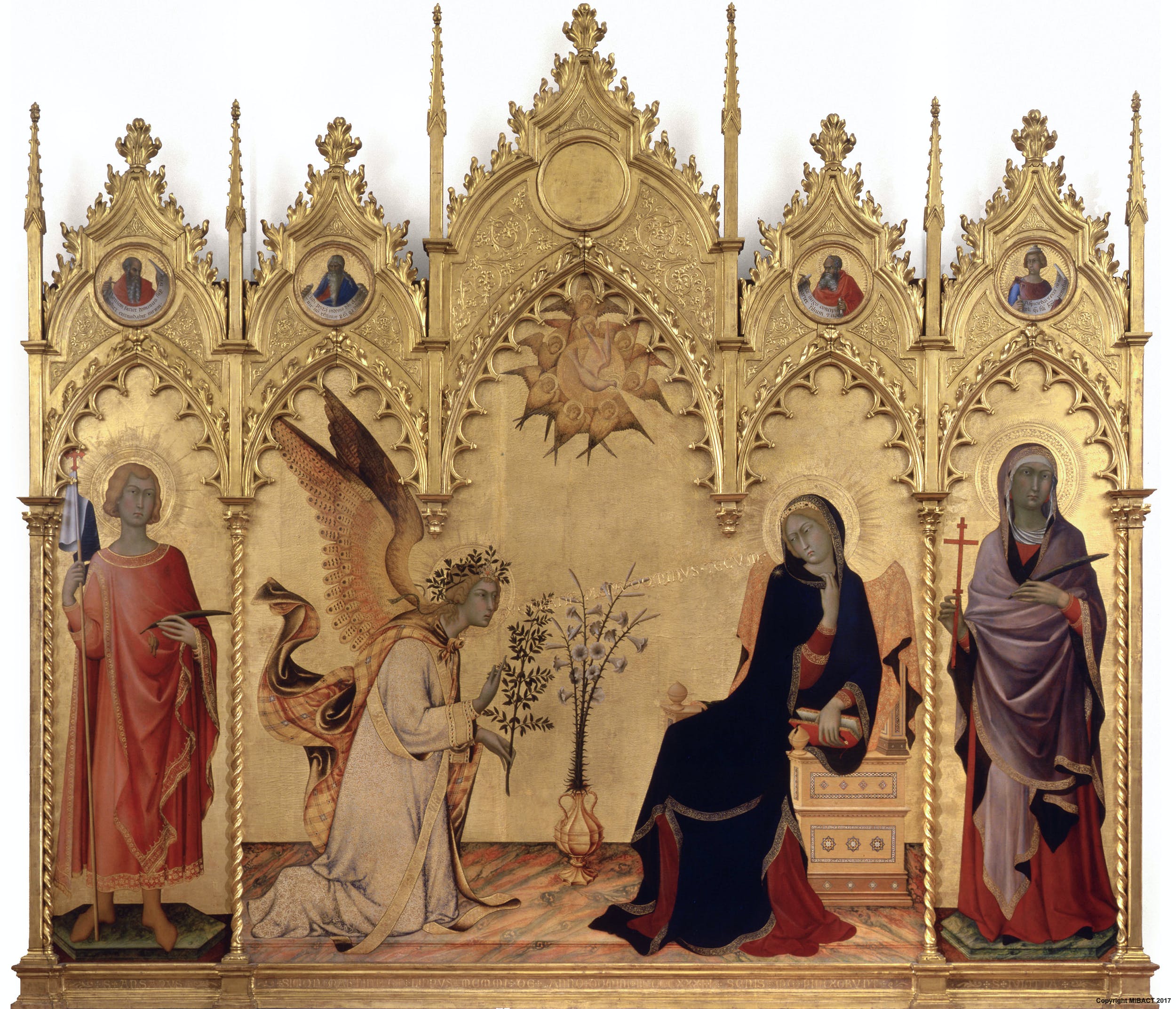


 Site1001beforeyoudiecollection